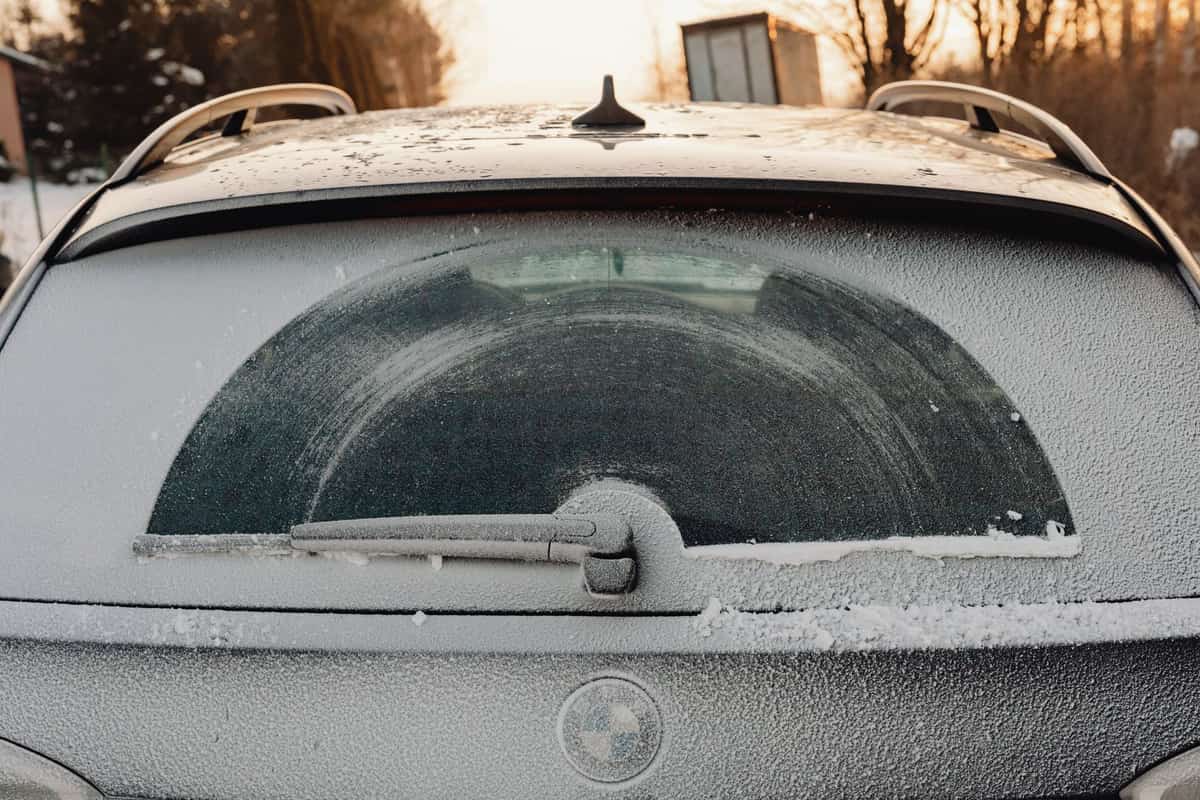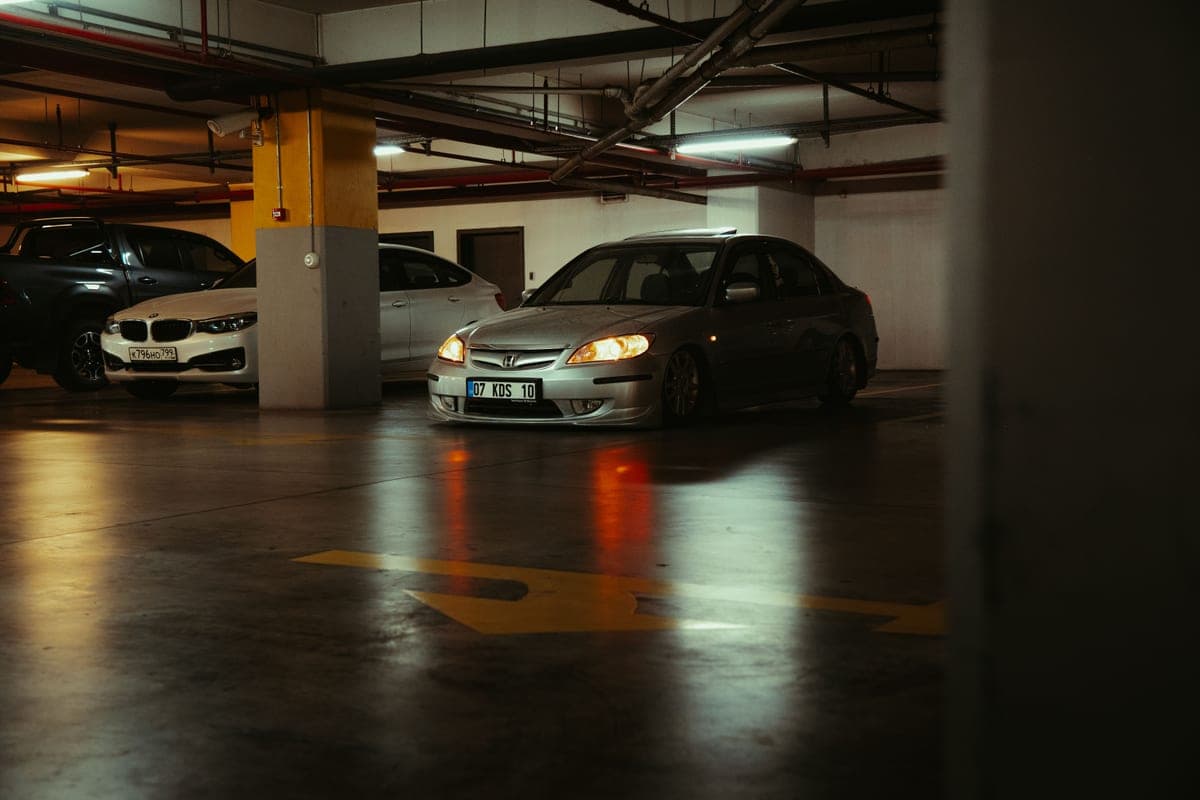
This is the most oversold feature in the category and the one where the gap between the listing and reality is widest. Practically every dash cam sold advertises 24-hour parking surveillance. Practically none explains that a camera plugged into your cigarette lighter socket switches off when you switch the car off, because on most vehicles that socket is switched with the ignition.
One camera in this section states the requirement in its own product title. That is unusual enough to be worth pointing at.
Step one: constant power
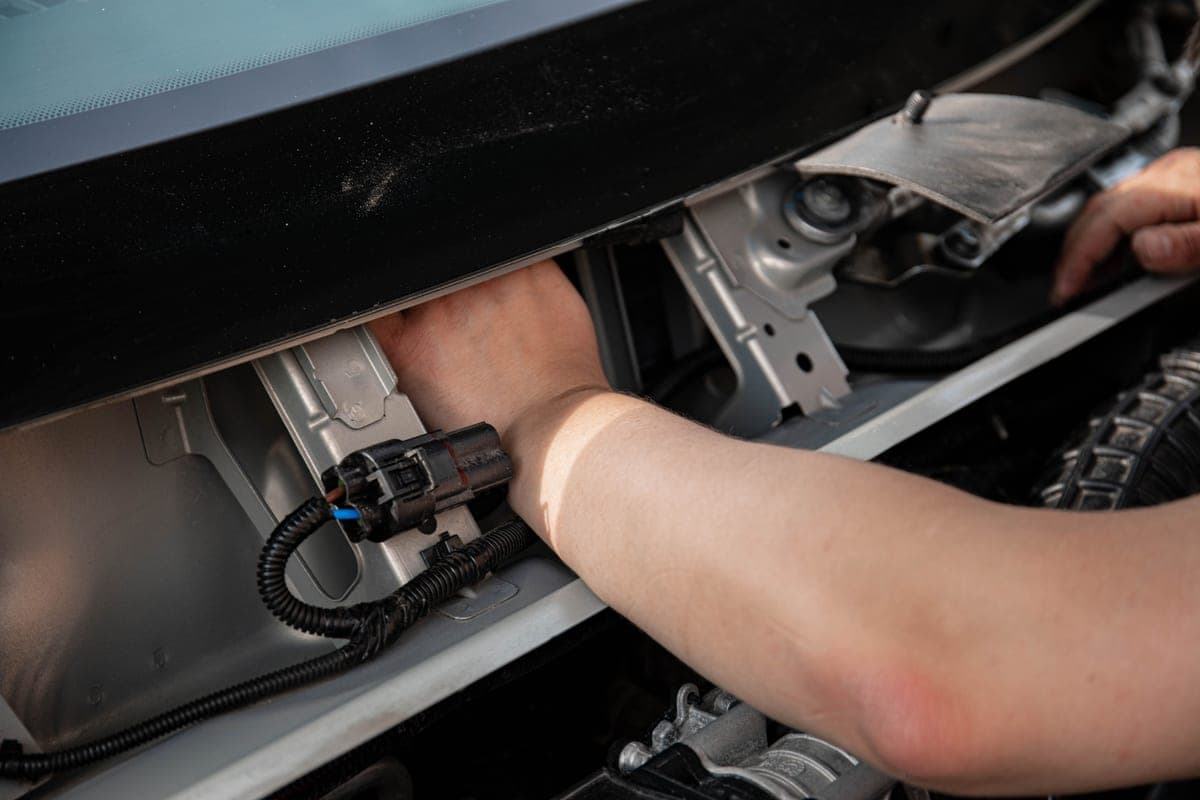
A hardwire kit is a small harness that connects to two fuses in your fuse box — one that stays live with the car off, one that is switched — plus a ground. That lets the camera tell whether the car is running, and it gives it power when it is not.
Every hardwire kit worth buying includes a low-voltage cutoff. It watches the battery voltage and shuts the camera down before the battery drops too far to start the car. Without one, a camera left recording in a car you do not drive for a week will flatten the battery, and that is not a theoretical risk.
Step two: pick the right mode
| Mode | Trigger | Catches | Misses |
|---|---|---|---|
| Impact / G-sensor | The camera feels a shock | Someone hitting your car hard enough to register | A door ding, a key down the flank, anyone walking away |
| Motion detection | Movement in frame | Someone approaching the car | Nothing much — but it fills the card with passers-by |
| Time-lapse | Nothing — it records continuously at a low frame rate | Everything, including the hit-and-run that never triggered a sensor | Detail between frames |
Quick picks
| # | Product | Best for | Price |
|---|---|---|---|
| 1 | 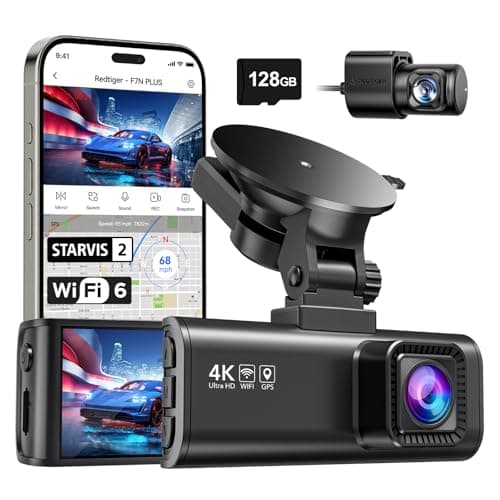 REDTIGER F7NP 4K Front + Rear Dash Cam, 24H Parking ModeThe only camera here whose listing states plainly that 24-hour parking mode needs a hardwire kit — which is true of all of them and admitted by almost none. REDTIGER F7NP 4K Front + Rear Dash Cam, 24H Parking ModeThe only camera here whose listing states plainly that 24-hour parking mode needs a hardwire kit — which is true of all of them and admitted by almost none. | Parking surveillance, done honestly | $149.98 · View on Amazon #ad Price as of October 25, 2026. How we’re funded |
| 2 | 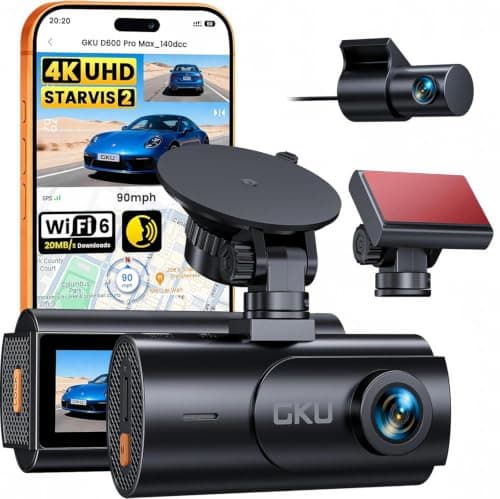 GKU D600 Pro Max 4K Dual Dash Cam, STARVIS 2The cheapest camera on this site that names its sensor rather than quoting megapixels — a Sony STARVIS 2, which is the part that decides whether a plate is readable at night. GKU D600 Pro Max 4K Dual Dash Cam, STARVIS 2The cheapest camera on this site that names its sensor rather than quoting megapixels — a Sony STARVIS 2, which is the part that decides whether a plate is readable at night. | A named sensor at the bottom of the price range | $79.99 · View on Amazon #ad Price as of October 25, 2026. How we’re funded |
| 3 | 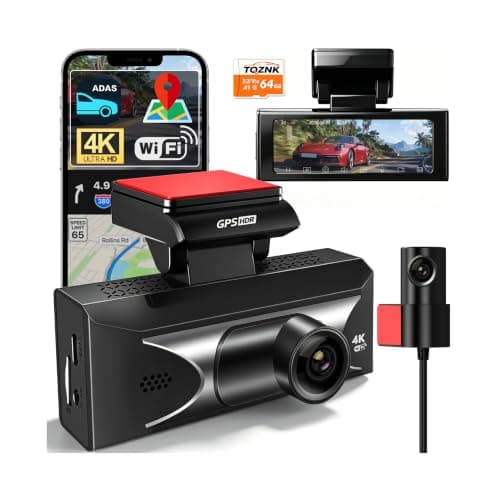 TQZNK 4K Front + 2.5K Rear Dash Cam with ADAS2.5K at the back rather than the usual 1080p, plus a supercapacitor rated from -22°F to 158°F — the widest published temperature range on this page. TQZNK 4K Front + 2.5K Rear Dash Cam with ADAS2.5K at the back rather than the usual 1080p, plus a supercapacitor rated from -22°F to 158°F — the widest published temperature range on this page. | The best rear resolution here | $89.97 · View on Amazon #ad Price as of October 25, 2026. How we’re funded |
| 4 | 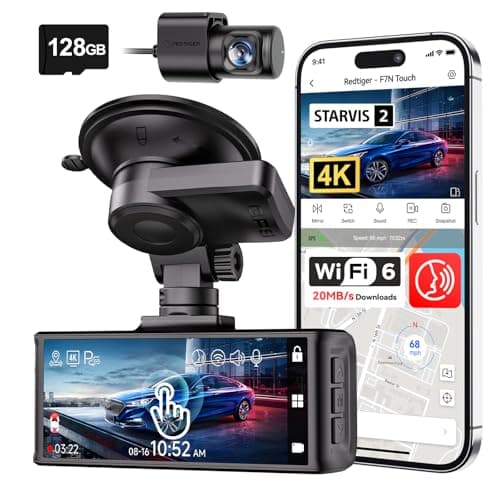 REDTIGER F7N Touch 4K Front + Rear Dash CamSTARVIS 2 sensor, 4K front, supercapacitor, GPS and a touch screen. On paper this is the most complete specification on this page. REDTIGER F7N Touch 4K Front + Rear Dash CamSTARVIS 2 sensor, 4K front, supercapacitor, GPS and a touch screen. On paper this is the most complete specification on this page. | The best-specified sensor here | $169.99 · View on Amazon #ad Price as of October 25, 2026. How we’re funded |
#1 · Parking surveillance, done honestly
REDTIGER F7NP 4K Front + Rear Dash Cam, 24H Parking Mode
REDTIGER
The only camera here whose listing states plainly that 24-hour parking mode needs a hardwire kit — which is true of all of them and admitted by almost none.
Every 24-hour parking claim in this category assumes constant power. Your cigarette lighter socket usually dies with the ignition, so the camera dies with it.
A hardwire kit taps a fuse that stays live and includes a low-voltage cutoff so the camera stops before it flattens your battery. Budget for the kit and, if you are not comfortable behind a fuse panel, for the fitting.
REDTIGER saying this in the product title is the single most honest line in this category, and it is why this camera is on the page.
What works
- States the hardwire requirement up front
- STARVIS 2 sensor
- 5.8 GHz Wi-Fi
- Card included
What does not
- The hardwire kit is an extra purchase and an extra job
- Rear resolution not stated as 4K
- Fuse-tap installation voids nothing but does require care
Skip this if
Skip it if you will not hardwire it. Without constant power you have bought a driving camera, and the cheaper models on this page do that too.
Where these numbers came from
We have not handled this product. Here is what we did instead.
#2 · A named sensor at the bottom of the price range
GKU D600 Pro Max 4K Dual Dash Cam, STARVIS 2
GKU
The cheapest camera on this site that names its sensor rather than quoting megapixels — a Sony STARVIS 2, which is the part that decides whether a plate is readable at night.
A named sensor is the one specification that predicts night performance, and at this price it is usually the first thing to disappear behind a megapixel number. STARVIS 2 is the current Sony low-light part and it is stated outright here.
Pre-recording is the parking feature worth understanding. An impact trigger starts recording once something has already hit you; pre-recording keeps a rolling buffer, so you get the thirty seconds before the hit as well as after it.
Read the HDR line carefully, because it is a trade the listing states and most buyers miss: HDR only runs with the front camera alone. Plug the rear camera in and you lose it.
What works
- Names a Sony STARVIS 2 sensor rather than publishing megapixels
- Three parking modes including a pre-event buffer
- 5.8 GHz Wi-Fi 6 at up to 20 MB/s, the fastest transfer figure on this page
- Supercapacitor and built-in GPS
What does not
- No memory card in the box on this version
- HDR is unavailable whenever the rear camera is connected, per the listing
- Parking mode needs a hardwire kit sold separately
- 1080p rear
Skip this if
Skip it if you want to unbox it and drive. There is no card in this version and no hardwire kit, so budget for both before the headline features work.
Where these numbers came from
We have not handled this product. Here is what we did instead.
#3 · The best rear resolution here
TQZNK 4K Front + 2.5K Rear Dash Cam with ADAS
TQZNK
2.5K at the back rather than the usual 1080p, plus a supercapacitor rated from -22°F to 158°F — the widest published temperature range on this page.
Rear resolution is where this category cuts corners, and the rear camera is the one that films the car that rear-ends you. 2.5K is a real upgrade over 1080p for reading a plate at night.
-22°F matters if you park outside in a northern winter. A camera that will not boot at -10°F is not recording your morning commute.
ADAS on a $100 dash cam is a lane-departure beep, not a driver aid. Treat it as noise you can switch off.
What works
- 2.5K rear
- Widest published temperature range here
- 5.8 GHz Wi-Fi and a 64 GB card included
What does not
- ADAS is marketing rather than a safety system
- Newer listing with less history
- 24H parking still assumes constant power
Skip this if
Skip it if you park in a garage in a mild climate — you are paying for cold-weather margin you will not use.
Where these numbers came from
We have not handled this product. Here is what we did instead.
#4 · The best-specified sensor here
REDTIGER F7N Touch 4K Front + Rear Dash Cam
REDTIGER
STARVIS 2 sensor, 4K front, supercapacitor, GPS and a touch screen. On paper this is the most complete specification on this page.
STARVIS 2 is Sony's low-light sensor line and it is the specification that actually decides whether a night plate is readable. Resolution without sensor quality gives you a very sharp picture of nothing.
A supercapacitor instead of a lithium battery is the right choice for a device that lives on a windshield. Batteries swell and fail in summer heat; capacitors tolerate it.
Parking mode on a G-sensor trigger records on impact. It does not record the person who keyed your door and walked away — that needs a motion or time-lapse mode and, usually, a hardwire kit.
What works
- STARVIS 2 sensor, published
- Supercapacitor rather than a battery
- 5 GHz Wi-Fi transfers footage far faster than 2.4 GHz
- 128 GB card included
What does not
- Rear camera is 1080p, not 4K
- Parking mode is impact-triggered rather than continuous
- No published operating temperature range on this listing
Skip this if
Skip it if you want true 24-hour parking surveillance. That needs continuous power and a hardwire kit, and this is not sold as that.
Where these numbers came from
We have not handled this product. Here is what we did instead.
Step three: temperature
Parking mode means the camera is running while the car sits in whatever the weather is doing. That is the scenario the published operating temperature range describes, and it is the reason two cameras publishing one — -20°F to 176°F and -22°F to 158°F — are on this page. A camera that will not boot at -10°F is not doing overnight surveillance in a northern winter.
| Spec | REDTIGER | GKU | TQZNK | REDTIGER |
|---|---|---|---|---|
| Front resolution | 4K, 170° wide angle | 3840 x 2160 (4K UHD) | 4K | 4K UHD, 170° wide angle |
| Sensor | Sony STARVIS 2 | Sony STARVIS 2 (front) | Not published | Sony STARVIS 2 |
| Parking mode | 24H (hardwire kit required, stated on the listing) | Not published | Not published | G-sensor triggered |
| Connectivity | 5.8 GHz Wi-Fi, 20 MB/s download | 5.8 GHz Wi-Fi 6 and 2.4 GHz, up to 20 MB/s; built-in GPS | 5.8 GHz Wi-Fi, 20 MB/s, GPS | 5 GHz Wi-Fi, GPS |
| Detection | G-sensor incident detection | Not published | Not published | Not published |
| Card included | Yes | Not published | 64 GB | 128 GB |
| Hardwire kit included | Not published | Not published | Not published | Not published |
| Rear resolution | Not published | 1080P | 2.5K | 1080p FHD, 140° wide angle |
| Field of view | Not published | 170° front · 150° rear | Not published | Not published |
| Power storage | Not published | Supercapacitor | Built-in supercapacitor | Supercapacitor |
| Parking | Not published | Time-lapse, collision detection, and pre-recording 30–60 s around an event | Not published | Not published |
| Card support | Not published | Up to 512 GB — no card in the box | Not published | Not published |
| Operating range | Not published | Not published | -22°F to 158°F | Not published |
| Extras | Not published | Not published | ADAS, WDR night vision, 3" IPS, 24H parking mode | Not published |
What we cannot tell you
How much current each of these draws in parking mode, which is the figure that would let you calculate how long it can watch your car before the cutoff trips. None of these listings publishes it. Measuring it properly needs a bench and a meter, which we do not have, so the row stays empty rather than being filled with an estimate people would plan around.
How we picked these
Cameras whose listings are specific about what parking mode requires, and which publish something checkable about operating in a parked car. Every figure comes from the maker's own listing and is cited on the card.
Sources
Everything on this page traces back to one of these. Where a figure could not be sourced, the page says so rather than filling the gap.