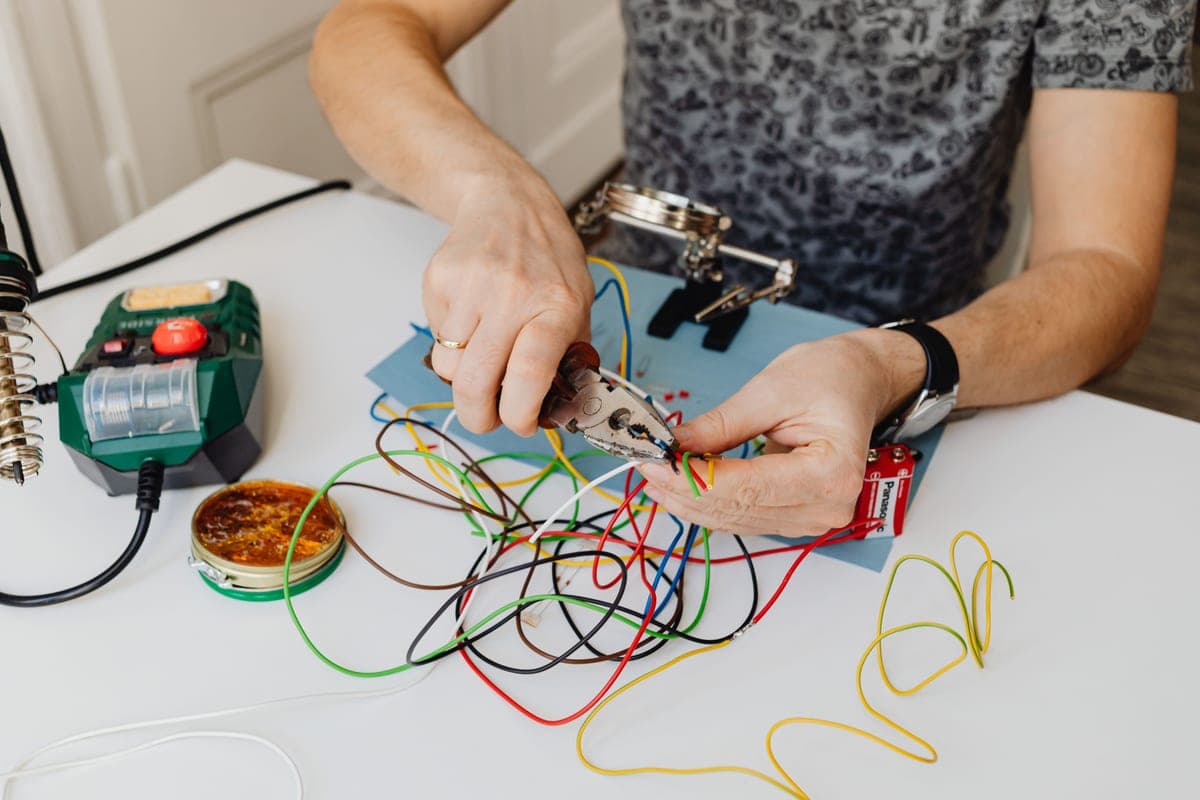
A dash cam plugged into the cigarette lighter stops recording when you switch the car off. That is fine until the thing you wanted filmed happens in a parking lot, which is where most of them happen. Parking mode fixes it, and parking mode needs a power source that stays live — which means wiring the camera to the fuse box or the OBD2 port rather than the socket.
Which creates the problem this entire product class exists to solve. A camera drawing from a parked car's battery will, given long enough, flatten it. Every kit here is a switch that decides when to stop.
The cutoff voltage is the product
Everything else on these listings is packaging. The kit monitors the battery and cuts power below a set voltage, leaving enough charge to start the engine. Set it too low and you get a long parking mode and a car that will not start; too high and the camera switches off before it has filmed anything.
| Kit | Cutoff | Adjustable? | Delay before cutting |
|---|---|---|---|
| Suplogico 4-level | 11.6 / 11.9 / 12.2 / 12.5V | Yes, four settings | Not published |
| Gebildet | 11.6V (23.2V on 24V) | No | Not published |
| REDTIGER F7N kit | 11.8V ±0.2 | No | 60 seconds |
| Suplogico OBD2 | 11.6V | No | Not published |
| ROVE Ultimate | Not published | Not published | Not published |
Two things fall out of that table. The first is the REDTIGER delay: voltage sags briefly whenever a load comes on, and a kit that cuts on the dip rather than on a sustained reading is a kit that keeps switching your camera off. It is the only listing here that publishes a delay, and it is a meaningful design decision.
The second is the last row. The most expensive kit on this page publishes no cutoff voltage, no input range, no output rating and no cable length — on a product whose only function is knowing when to stop.
Fuse tap or OBD2 plug
There are two ways to get constant power without cutting anything. A fuse tap slots into an existing fuse position and piggybacks on it. An OBD2 adapter plugs into the diagnostic port under the dash, which on many cars is live with the ignition off.
| Route | What it needs | What it costs | Reversible? |
|---|---|---|---|
| Fuse tap | Access to the fuse box and the right tap format | Twenty minutes and a trim tool | Yes — pull the tap, refit the fuse |
| OBD2 plug | A port that stays powered with the ignition off | The diagnostic port itself | Yes — unplug it |
Fuse tap format is the thing that stops an install dead, and it is vehicle-specific. The kits here ship between four and eight taps across Micro2, Mini, low-profile Mini and ATO formats. The one kit that does not list its formats at all is, again, the most expensive one.
The signalling trap nobody mentions
Two of these five listings refer to an A5B5 or A8B8 signal, and it is worth understanding because it is the reason a correctly wired kit sometimes fails to drive a camera at all. The USB-C connector carries a resistor configuration that tells the device what it is plugged into. Cameras use it to know whether they are in driving mode or parking mode, and the two conventions are not interchangeable.
If your camera's manual specifies a particular hardwire cable, that is what it is specifying. The OBD2 kit here ships the A8B8 adapter in the box; the four-level kit states it uses A5B5 and names brands it may not suit. Nobody else mentions it, which does not mean their kits are immune.
How we ranked these
- Does it publish a cutoff voltage? Without one you cannot compare it to anything.
- Can the cutoff be adjusted, or is it a single value chosen for an average battery?
- Does it publish a cable length? The run from windshield to fuse box is longer than people expect.
- Which fuse tap formats are in the box, and are they listed?
- Does the listing name its own limits — vehicle voltage, EV compatibility, signalling, battery age?
We have not installed these. What we have done is read five listings against the same five questions, which is how the ranking below falls out — and it is why a ten-dollar kit finishes above a thirty-dollar one.
| Spec | Suplogico | Gebildet | REDTIGER | Suplogico | ROVE |
|---|---|---|---|---|---|
| Connector | USB-C | USB-C | USB-C | OBD2 plug to USB-C | USB-C |
| Input | 12V – 24V | 12V – 24V | 12V – 24V | 12V only | Not published |
| Output | 5V / 3A | 5V / 2.5A | 5V / 2A | Not published | Not published |
| Cutoff voltage | 11.6V / 11.9V / 12.2V / 12.5V, selectable | 11.6V (23.2V on a 24V system) | 11.8V ±0.2, power cut after 60 seconds | 11.6V | Not published |
| Cable length | 11.5 ft | 13 ft (3.2 m) | Not published | 11.5 ft | Not published |
| Fuse taps included | 8 — Micro2 x2, Mini x2, LP Mini x2, ATO x2 | LP Mini, Mini, ATO, Micro2 | Double-4 fuse set | None — it does not use the fuse box | Stated as all necessary fuse taps, formats not listed |
| Extras | Voltage display, ACC detection, ferrite noise core, install tool | Pry bar and adhesive pads for hiding the run | Over-current, short-circuit and reverse-connection protection | A8B8 adapter cable included, surge protection | Volt meter included, printed manual, how-to videos |
| Compatibility note | Uses the standard A5B5 signal; some cameras require A8B8 | Publishes a parking-duration warning | Stated not applicable to trucks above 24V | Needs a constantly-powered OBD2 port; not for EVs | ROVE R2-4K (USB-C only), R2-4K PRO, R2-4K DUAL, R2-4K DUAL PRO, R3 |
Quick picks
| # | Product | Best for | Price |
|---|---|---|---|
| 1 | 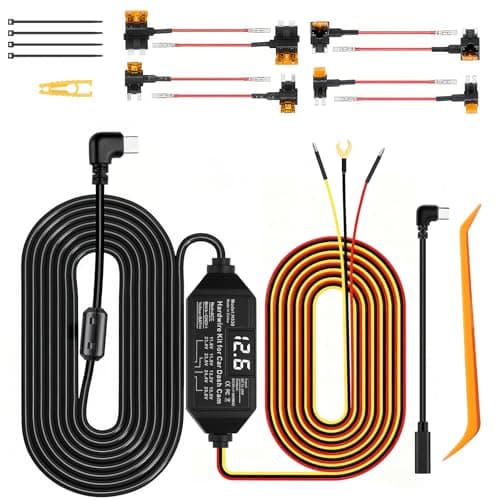 Suplogico Dash Cam Hardwire Kit, USB-C, 4-Level Low Voltage ProtectionThe only kit here that lets you pick the cutoff rather than accepting the maker's, and the only one with a voltage display so you can see what your battery is actually doing. | Choosing your own cutoff voltage | $16.99 · View on Amazon #ad Price as of October 25, 2026. How we’re funded |
| 2 | 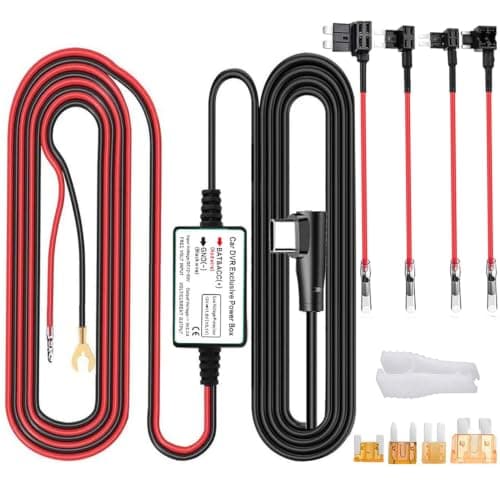 Gebildet Dash Cam Hardwire Kit, Type-C, 13 ftTen dollars, and it publishes a cutoff voltage, a cable length, an output rating, four fuse formats and the only honest warning in this category about how long you can leave parking mode running. | The cheapest kit that publishes everything | $9.79 · View on Amazon #ad Price as of October 25, 2026. How we’re funded |
| 3 | 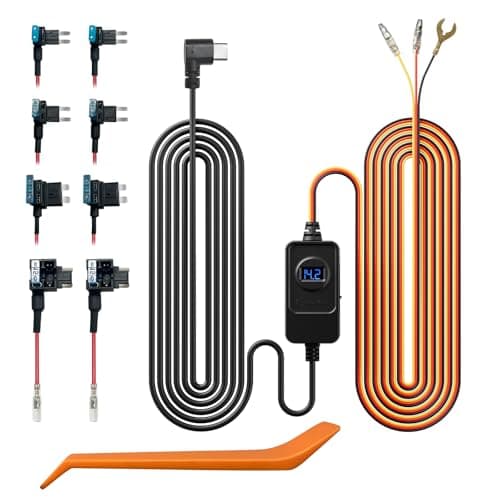 REDTIGER F7N Dash Cam Hardwire Kit, USB-CThe maker's own kit for the cameras this site ranks most often, and the only one here that publishes both a cutoff voltage and the delay before it acts. | Anyone running a REDTIGER camera | $25.99 · View on Amazon #ad Price as of October 25, 2026. How we’re funded |
| 4 | 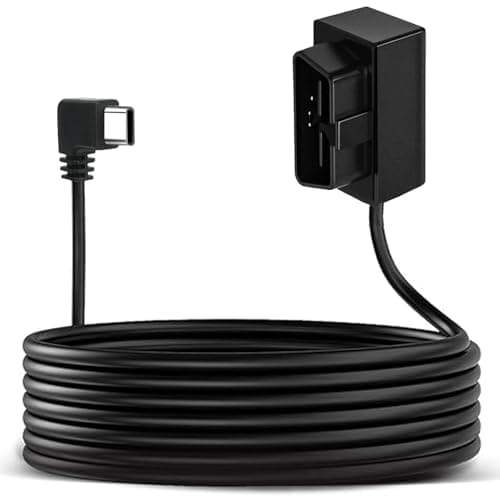 Suplogico OBD2 to USB-C Dash Cam Power Cable, 11.5 ftPlugs into the OBD2 port instead of a fuse tap, which removes the hardest part of the job — and its listing is unusually blunt about the three ways that can fail. | Installing without opening the fuse box | $14.19 · View on Amazon #ad Price as of October 25, 2026. How we’re funded |
| 5 | 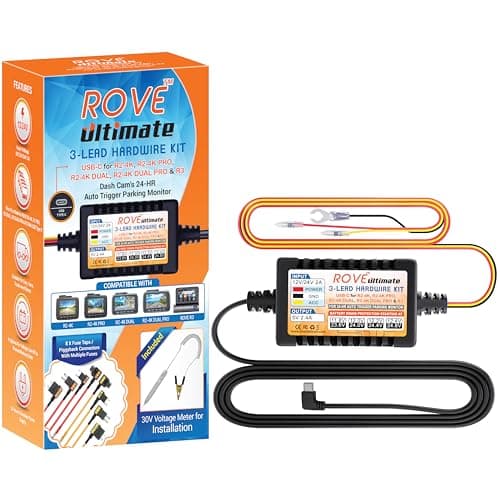 ROVE Ultimate Dash Cam Hardwire Kit, USB-CA maker's kit for a specific camera family that names exactly which models it suits — and then publishes not one electrical specification, at the highest price on this page. | ROVE R2-4K and R3 owners who want the matched part | $29.99 · View on Amazon #ad Price as of October 25, 2026. How we’re funded |
#1 · Choosing your own cutoff voltage
Suplogico Dash Cam Hardwire Kit, USB-C, 4-Level Low Voltage Protection
Suplogico
The only kit here that lets you pick the cutoff rather than accepting the maker's, and the only one with a voltage display so you can see what your battery is actually doing.
Four selectable cutoffs is not a gimmick. A battery in Phoenix and a battery in Minnesota do not have the same usable margin above the point where the engine will not start, and a fixed 11.6V cutoff assumes one of them.
The voltage display is the other genuinely useful part. Every parking-mode problem on the internet comes down to not knowing what the battery was doing overnight, and this is the one kit here that shows you.
Eight fuse taps in four formats is a more complete box than anything else at this price. Fuse format is the other thing that stops an install dead, and it is vehicle-specific.
What works
- Selectable cutoff across four voltages instead of one fixed value
- Voltage display built into the inline unit
- Eight fuse taps covering four common formats
- States the A5B5 signal standard, which is the compatibility gotcha nobody else names
What does not
- The A5B5 signal will not drive cameras that expect A8B8, and the listing names two brands it may not suit
- No published amperage draw for the unit itself
- The display adds a lit object under the dash that some installers will not want
- No warranty term published
Skip this if
Skip it if your camera's manual specifies an A8B8 hardwire cable. That is a signaling requirement, not a preference, and the four-level cutoff does not help if the camera never wakes into parking mode.
Where these numbers came from
We have not handled this product. Here is what we did instead.
#2 · The cheapest kit that publishes everything
Gebildet Dash Cam Hardwire Kit, Type-C, 13 ft
Gebildet
Ten dollars, and it publishes a cutoff voltage, a cable length, an output rating, four fuse formats and the only honest warning in this category about how long you can leave parking mode running.
The specification list is complete at a price where complete is not normal. Cutoff, output, length and fuse formats are all stated where the most expensive kit here publishes none of them.
The parking-duration warning is the reason it ranks this high. Hardwiring a dash cam is the one accessory purchase that can leave you with a car that will not start, and this is the only listing that says so in plain language.
A 13 ft run is the longest published here, which matters more than it sounds: the cable has to go from the camera at the top of the windshield, down the A-pillar, along the sill and into the fuse box, and coming up short is the standard installation failure.
What works
- Publishes cutoff, output, length and fuse formats at the lowest price here
- Longest published cable run on this page at 13 ft
- Warns against parking mode on an older battery, against its own interest
- Includes the pry bar and pads the job actually needs
What does not
- Fixed cutoff — no way to raise it for a marginal battery
- No voltage display, so you are trusting the cutoff blind
- No ACC detection published, so mode switching depends on how you wire it
- No warranty term published
Skip this if
Skip it if your battery is already tired. The listing tells you this itself: on a battery over three years old the right answer is a new battery first, not a cheaper cutoff.
Where these numbers came from
We have not handled this product. Here is what we did instead.
#3 · Anyone running a REDTIGER camera
REDTIGER F7N Dash Cam Hardwire Kit, USB-C
REDTIGER
The maker's own kit for the cameras this site ranks most often, and the only one here that publishes both a cutoff voltage and the delay before it acts.
The 60-second delay is a detail no other kit publishes and it is the difference between a cutoff that works and one that nags. Voltage sags briefly under a starter load; a kit that cuts instantly on a dip is a kit that keeps switching your camera off.
11.8V is also the highest fixed cutoff here, which is the conservative choice — it leaves more margin for starting and gives you less parking-mode runtime. That trade is the entire design decision in this product class.
Buying the camera maker's own kit removes the signaling question entirely, which on this evidence is worth the price difference on its own.
What works
- Publishes both the cutoff voltage and the 60-second delay before it acts
- Highest fixed cutoff here, so the most starting margin
- Matched to the REDTIGER cameras this site ranks, removing the signal-compatibility question
- 1-year replacement warranty stated
What does not
- No published cable length, which is the measurement the install depends on
- 5V / 2A output is the lowest here
- Costs more than twice the cheapest kit that publishes more specifications
- Not usable above 24V, so no heavy commercial vehicles
Skip this if
Skip it if you do not own a REDTIGER. The premium here is paying for a guaranteed match to one brand's cameras, and if you have a different brand you are paying it for nothing.
Where these numbers came from
We have not handled this product. Here is what we did instead.
#4 · Installing without opening the fuse box
Suplogico OBD2 to USB-C Dash Cam Power Cable, 11.5 ft
Suplogico
Plugs into the OBD2 port instead of a fuse tap, which removes the hardest part of the job — and its listing is unusually blunt about the three ways that can fail.
This is the kit for the person who is not going to open a fuse box, and that is a legitimate position — a mis-tapped fuse is a worse outcome than a visible plug.
The catch is that the OBD2 port is not guaranteed to be live when the car is off. On many cars it is, on some it is not, and on some it takes twenty minutes to decide. The listing says so, which is more than most OBD kits do.
It ships the A8B8 adapter in the box, which is the signaling problem the other kits leave you to discover. That is a genuinely thoughtful inclusion at this price.
What works
- No fuse box work at all — it plugs into a port that is already there
- Includes the A8B8 adapter for cameras that need that signal
- States its own failure modes plainly, including the 3 to 20 minute delay
- Cheapest route to parking mode if your OBD port cooperates
What does not
- 12V only, and explicitly not for some EVs
- Occupies the OBD2 port, which is where a mechanic plugs in a scan tool
- No published output rating for the adapter
- Depends entirely on your car keeping the port powered with the ignition off
Skip this if
Skip it if you have not checked your OBD2 port with a voltmeter and the ignition off. Everything about this product assumes that port is live, and no amount of product quality fixes a car that cuts it.
Where these numbers came from
We have not handled this product. Here is what we did instead.
#5 · ROVE R2-4K and R3 owners who want the matched part
ROVE Ultimate Dash Cam Hardwire Kit, USB-C
ROVE
A maker's kit for a specific camera family that names exactly which models it suits — and then publishes not one electrical specification, at the highest price on this page.
The model list is the value. If you own one of the five cameras named, this removes every compatibility question in one purchase, and that is worth something real.
What you are not getting is any way to compare it. No cutoff voltage, no input range, no output rating, no cable length — on the product whose whole job is deciding when to stop drawing from your battery.
It does include a volt meter, which implies the cutoff exists and is being monitored. Implies is doing a lot of work in that sentence.
What works
- Names five specific camera models it is built for
- Volt meter included rather than sold separately
- Printed manual and how-to videos, which is more support than this category usually offers
- Sold by the camera maker, so returns route to one place
What does not
- Publishes no cutoff voltage at all — the defining specification of the product
- No input range, output rating or cable length published
- Highest price on this page with the thinnest specification sheet
- Fuse tap formats are not listed, so you cannot check them against your fuse box
Skip this if
Skip it unless you own one of the ROVE cameras named on the listing. Without that match you are paying triple the price of a kit that publishes its cutoff voltage, in exchange for a brand name on the box.
Where these numbers came from
We have not handled this product. Here is what we did instead.
What nobody publishes
- The kit's own standby draw. Every one of these consumes something while monitoring, and not one states how much.
- How long parking mode will actually run on a given battery. That depends on the battery, the camera and the temperature, and no listing attempts it.
- Whether the cutoff is measured at the fuse box or at the battery, which are not the same voltage under load.
- Any fuse rating guidance — which circuit to tap is left entirely to the installer.
- Cable length on two of the five kits, including the most expensive.
When not to hardwire at all
If your battery is more than a few years old, the honest answer is to replace the battery before adding a permanent draw to it — one of these listings says so itself. If the car is leased and you are wary of the fuse box, the OBD2 route leaves nothing behind. And if all you wanted was recording while driving, you do not need any of this: the socket cable in the camera box already does that job.
Our guide to dash cam power options covers the three ways to feed a camera and which of them supports parking mode at all. This page is the next step once you have decided hardwiring is the answer.
Sources
Everything on this page traces back to one of these. Where a figure could not be sourced, the page says so rather than filling the gap.
- Suplogico dash cam hardwire kit USB-C with selectable 11.6/11.9/12.2/12.5V cutoff, voltage display, 11.5 ft cable, 8 fuse taps, stated A5B5 signal — retailer listing, Amazon.com (retrieved 2026-09-27)
- Gebildet dash cam hardwire kit, 11.6V cutoff (23.2V on 24V), 13 ft, four fuse tap formats and a published 3-day parking and battery-age warning — retailer listing, Amazon.com (retrieved 2026-09-27)
- REDTIGER F7N hardwire kit, 5V/2A output, power cut after 60 seconds below 11.8V ±0.2, stated not applicable above 24V — retailer listing, Amazon.com (retrieved 2026-09-27)
- Suplogico OBD2 to USB-C power cable, 11.6V cutoff, A8B8 adapter included, stated 12V only and not for some EVs — retailer listing, Amazon.com (retrieved 2026-09-27)
- ROVE Ultimate dash cam hardwire kit, stated for five named ROVE cameras, with no published cutoff voltage, input range, output rating or cable length — retailer listing, Amazon.com (retrieved 2026-09-27)