Both of these brands turn up on every dash cam shortlist, and most comparisons between them end in a draw because they are being scored on the same list of features. That is the wrong approach. They publish different things, and what they publish tells you who each one is built for.
The one difference that settles it for most people
VANTRUE's N4 Pro S is a three-channel camera: front, cabin and rear. REDTIGER's F7 range is two-channel: front and rear.
If you drive for a rideshare platform, carry passengers you may need to account for, or want a record of the inside of the car, that is the end of the comparison. No two-channel camera does that job at any price, and our rideshare roundup covers the three-channel field in more depth.
If you do not need the cabin, keep reading, because the rest of the comparison goes the other way.
What each brand publishes
| VANTRUE N4 Pro S | REDTIGER F7NP | REDTIGER F7N Touch | |
|---|---|---|---|
| Channels | 3 — front, inside, rear | 2 — front and rear | 2 — front and rear |
| Front resolution | 4K at 30 FPS | 4K, 170° | 4K UHD, 170° |
| Rear resolution | 2.5K | Not detailed on the listing | 1080p, 140° |
| Interior resolution | 1080P | No interior channel | No interior channel |
| Field of view | 155° front · 160° rear · 165° inside | 170° front | 170° front · 140° rear |
| Sensor | Triple STARVIS 2 | Sony STARVIS 2 | Sony STARVIS 2 |
| Power storage | Super capacitor, range not published | Supercapacitor, range not published | Supercapacitor, range not published |
| Transfer | 5 GHz Wi-Fi, speed not published | 5.8 GHz Wi-Fi, 20 MB/s | 5 GHz Wi-Fi |
| Card | Up to 1 TB, none included | Included | 128 GB included |
Read the three VANTRUE resolution rows together rather than as one number. The 4K is the front camera; the cabin channel — the reason to buy a three-channel camera at all — runs at 1080P, which is the lowest figure in the table. A REDTIGER puts its whole bandwidth into two views and records neither of them at 1080P. That is the real shape of the trade: VANTRUE buys you a third view, and the third view is the cheapest one.
Quick picks
| # | Product | Best for | Price |
|---|---|---|---|
| 1 | 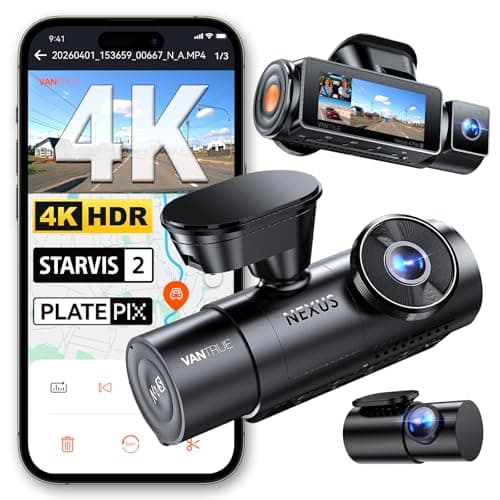 VANTRUE N4 Pro S 4K 3-Channel Dash Cam, Front + Inside + Rear165° on the inside camera is the widest interior figure published on this page, and it is the only camera here that pairs that with a named sensor generation on all three channels and IR on the one pointed at your passengers. | The widest published interior field of view | $359.99 · View on Amazon #ad Price as of November 8, 2026. How we’re funded |
| 2 | 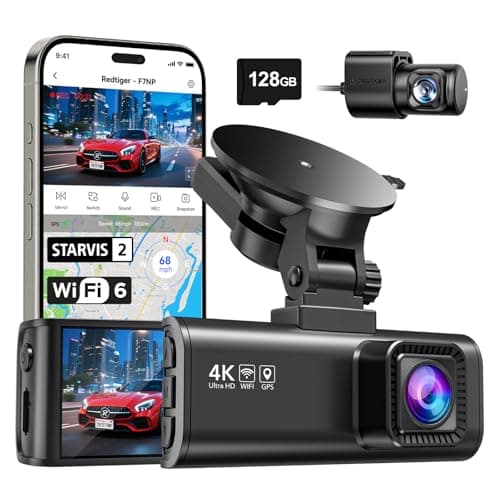 REDTIGER F7NP 4K Front + Rear Dash Cam, 24H Parking ModeThe only camera here whose listing states plainly that 24-hour parking mode needs a hardwire kit — which is true of all of them and admitted by almost none. | Parking surveillance, done honestly | $169.99 · View on Amazon #ad Price as of November 8, 2026. How we’re funded |
| 3 | 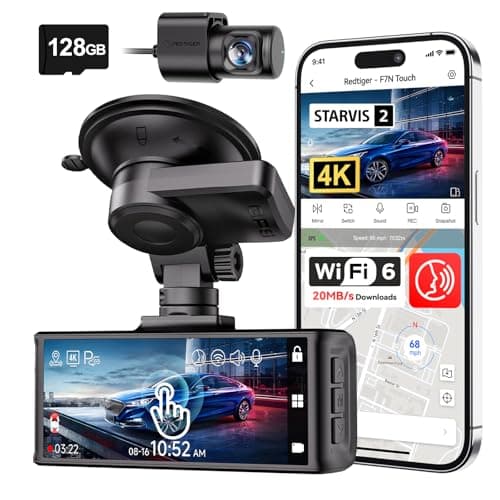 REDTIGER F7N Touch 4K Front + Rear Dash CamSTARVIS 2 sensor, 4K front, supercapacitor, GPS and a touch screen. On paper this is the most complete specification on this page. | The best-specified sensor here | $189.99 · View on Amazon #ad Price as of November 8, 2026. How we’re funded |
#1 · The widest published interior field of view
VANTRUE N4 Pro S 4K 3-Channel Dash Cam, Front + Inside + Rear
VANTRUE
165° on the inside camera is the widest interior figure published on this page, and it is the only camera here that pairs that with a named sensor generation on all three channels and IR on the one pointed at your passengers.
Read the resolution line as three numbers rather than one. The 4K in the title is the front camera; the cabin channel — the one a rideshare driver actually bought this for — is the 1080P. That is the economy every three-channel camera makes somewhere, and this listing at least states all three figures plainly.
165° on the interior camera is the widest inside figure published on this page, and inside a car that is what decides whether both rear passengers are actually in frame rather than just the one behind you.
The listing also publishes a two-channel mode that drops the cabin camera and runs front and rear only, which it states cuts heat by about 30%. That is an unusually specific claim for this category, and heat is what kills a camera left on a windscreen through a summer.
What works
- Publishes a field of view for all three channels
- Widest published interior field of view on this page
- Names a current sensor generation — triple STARVIS 2 — rather than a generic CMOS
- IR night vision on the interior camera, which is the point of a rideshare camera
- A 1 TB card ceiling, the highest on this page, which three channels genuinely need
- Capacitor rather than a lithium battery
What does not
- The cabin channel is the lowest-resolution of the three, at 1080P
- No card included, and the hardwire kit that parking mode needs is a separate purchase
- No published operating temperature range, despite the extreme-temperature claim
- The most expensive camera on this page by some margin
- Bulkier on the glass than a two-channel unit
Skip this if
Skip it if you never carry passengers. The interior channel is the entire reason this costs what it does, and a two-channel camera gives you better value on the two views you would actually be using.
Where these numbers came from
We have not handled this product. Here is what we did instead.
#2 · Parking surveillance, done honestly
REDTIGER F7NP 4K Front + Rear Dash Cam, 24H Parking Mode
REDTIGER
The only camera here whose listing states plainly that 24-hour parking mode needs a hardwire kit — which is true of all of them and admitted by almost none.
Every 24-hour parking claim in this category assumes constant power. Your cigarette lighter socket usually dies with the ignition, so the camera dies with it.
A hardwire kit taps a fuse that stays live and includes a low-voltage cutoff so the camera stops before it flattens your battery. Budget for the kit and, if you are not comfortable behind a fuse panel, for the fitting.
REDTIGER saying this in the product title is the single most honest line in this category, and it is why this camera is on the page.
What works
- States the hardwire requirement up front
- STARVIS 2 sensor
- 5.8 GHz Wi-Fi
- Card included
What does not
- The hardwire kit is an extra purchase and an extra job
- Rear resolution not stated as 4K
- Fuse-tap installation voids nothing but does require care
Skip this if
Skip it if you will not hardwire it. Without constant power you have bought a driving camera, and the cheaper models on this page do that too.
Where these numbers came from
We have not handled this product. Here is what we did instead.
#3 · The best-specified sensor here
REDTIGER F7N Touch 4K Front + Rear Dash Cam
REDTIGER
STARVIS 2 sensor, 4K front, supercapacitor, GPS and a touch screen. On paper this is the most complete specification on this page.
STARVIS 2 is Sony's low-light sensor line and it is the specification that actually decides whether a night plate is readable. Resolution without sensor quality gives you a very sharp picture of nothing.
A supercapacitor instead of a lithium battery is the right choice for a device that lives on a windshield. Batteries swell and fail in summer heat; capacitors tolerate it.
Parking mode on a G-sensor trigger records on impact. It does not record the person who keyed your door and walked away — that needs a motion or time-lapse mode and, usually, a hardwire kit.
What works
- STARVIS 2 sensor, published
- Supercapacitor rather than a battery
- 5 GHz Wi-Fi transfers footage far faster than 2.4 GHz
- 128 GB card included
What does not
- Rear camera is 1080p, not 4K
- Parking mode is impact-triggered rather than continuous
- No published operating temperature range on this listing
Skip this if
Skip it if you want true 24-hour parking surveillance. That needs continuous power and a hardwire kit, and this is not sold as that.
Where these numbers came from
We have not handled this product. Here is what we did instead.
Where VANTRUE wins
- Three channels, including a cabin camera with infrared — the only way to record inside the car.
- A published field of view for every channel. Most cameras publish one figure for the front and nothing else, and the 165° interior figure is the widest inside number on this site.
- A named sensor generation on all three channels, not just the front.
- A 1 TB card ceiling, which three simultaneous channels genuinely need, against REDTIGER publishing no ceiling at all.
- A published two-channel mode that drops the cabin camera and, per the listing, cuts heat by about 30%.
Where REDTIGER wins
- A published transfer speed — 5.8 GHz and 20 MB/s on the F7NP — where VANTRUE publishes a Wi-Fi band but no speed.
- A card in the box on both models, 128 GB on the Touch. The VANTRUE ships without one, and a 1 TB ceiling is only useful if you buy the card.
- A published rear field of view on the Touch, at 140°.
- Substantially less money for the two views most drivers actually need.
The honest summary
VANTRUE is the coverage brand and REDTIGER is the value brand, at least as far as either will commit to on paper. If the cabin needs recording, the choice is made for you and the premium is the price of entry. If it does not, both brands now name the same sensor family, REDTIGER publishes the transfer speed VANTRUE does not, and it puts a card in the box — which makes the cheaper camera the better-specified one for a two-channel buyer.
Neither brand publishes a bitrate, which is the figure that would settle the image-quality question properly. That is a category-wide gap and the dedicated dash cam publications are the right place to look for real footage comparisons — we do not test cameras and will not pretend otherwise.
| Spec | VANTRUE | REDTIGER | REDTIGER |
|---|---|---|---|
| Channels | 3 — front, inside, rear | Not published | Not published |
| Resolution | 4K front · 2.5K rear · 1080P inside, at 30 FPS | Not published | Not published |
| Field of view | 155° front · 160° rear · 165° inside | Not published | Not published |
| Interior camera | IR night vision | Not published | Not published |
| Sensor | Triple STARVIS 2, with triple HDR and PlatePix | Sony STARVIS 2 | Sony STARVIS 2 |
| Power storage | Super capacitor | Not published | Supercapacitor |
| Parking mode | 24/7 buffered — motion and impact, from 10 seconds before the event, all three channels active | 24H (hardwire kit required, stated on the listing) | G-sensor triggered |
| Card support | Up to 1 TB, none included | Not published | Not published |
| Connectivity | 5 GHz Wi-Fi, built-in GPS, voice control | 5.8 GHz Wi-Fi, 20 MB/s download | 5 GHz Wi-Fi, GPS |
| Warranty | 18 months, per the listing | Not published | Not published |
| Front resolution | Not published | 4K, 170° wide angle | 4K UHD, 170° wide angle |
| Detection | Not published | G-sensor incident detection | Not published |
| Card included | Not published | Yes | 128 GB |
| Hardwire kit included | Not published | Not published | Not published |
| Rear resolution | Not published | Not published | 1080p FHD, 140° wide angle |
How we compared these
Line by line from each maker's own listing, with every figure cited and dated on the product card, and a not-published marker wherever a listing is silent. We have not handled either camera. Where a listing states a claim without a number — VANTRUE's extreme-temperature tolerance is the example here — it is recorded as not published rather than converted into a specification it never gave.
Sources
Everything on this page traces back to one of these. Where a figure could not be sourced, the page says so rather than filling the gap.
- VANTRUE N4 Pro S 4K 3 Channel Dash Cam, 4K+2.5K+1080P, 155°+160°+165°, triple STARVIS 2, IR night vision, super capacitor, 1 TB max — retailer listing, Amazon.com (retrieved 2026-10-14)
- REDTIGER F7NP 4K dash cam, Sony STARVIS 2, 5.8 GHz Wi-Fi 20 MB/s, 24H parking mode with hardwire kit required — retailer listing, Amazon.com
- REDTIGER F7N Touch 4K front and 1080p 140° rear, Sony STARVIS 2, 128 GB card included — retailer listing, Amazon.com