The question is usually asked as though the camera were the issue. It is not. A dash cam in a rental, a lease or a loan car runs into exactly two problems, and both of them are about attachment rather than about recording.
The first is the mount. Most compact dash cams ship with an adhesive pad and nothing else, and an adhesive pad is engineered not to let go. The second is power. Everything interesting a dash cam does while the car is parked requires constant power, and constant power normally means tapping a fuse — which is not something you do to a car you are returning on Friday.
Both have answers. Here they are, with what each one costs and what it gives up.
Problem one: the mount, and three ways around it
In rough order of how well each works.
A suction mount, which is the clean answer
A suction cup is designed to be removed, which is the entire specification. It comes off at the end of the trip, it leaves nothing, and it moves to the next car.
The catch is fit. Dash cam mount interfaces are proprietary, so a generic cradle may not take your camera's ball joint — which is why the first-party option is worth the premium if you are buying both together. Garmin's own universal suction mount ships with a choice of mounting arms, and that choice matters more than it sounds: windshield rake varies enormously between cars, and in a rental you discover yours after you have signed for it.
What no suction product in this category publishes is a temperature rating, and a suction cup on a windshield in August is the part most likely to let go. Treat a suction mount as reliable while you are driving and unproven on a car left in the sun.
Electrostatic film under the adhesive pad, which is the cheap answer
This is the trick worth knowing, and it costs about five dollars. An electrostatic film is a sheet of transparent plastic that clings to glass by static rather than by adhesive. You put the film on the windshield, stick the camera's adhesive pad to the film, and at the end of the trip you lift the film off. The bond you cannot undo is between the pad and the film, not between anything and the car.
A pack of six films with two sheets of double-sided adhesive comes in two sizes — 3.94 by 3.15 inches and 3.15 by 3.15 inches — which between them cover most compact-camera mount footprints. One install per trip means a pack lasts several.
The same caveat applies and harder: nobody in this product class publishes a temperature rating. For a camera that is unplugged and removed at the end of each day this is a non-issue. For a camera left on the glass in a hot car for a week, it is unproven.
A camera small enough not to need a mount at all
Not quite literally — everything needs attaching to something — but size does most of the work here. A camera that is two inches long reads as part of the mirror housing. A camera with a three-inch screen reads as equipment somebody installed.
That is the real argument for the Garmin Mini 3 and the VIOFO A119 Mini 2 in a borrowed car, and it is also why the specification that usually gets skipped — the dimensions — is the one to read first on this page.
| Camera | Dimensions | Weight | Resolution | Channels |
|---|---|---|---|---|
| Garmin Dash Cam Mini 3 | 2 x 1.3 x 0.8 in | 1.1 oz | 1080P | 1 |
| VIOFO A119 Mini 2 | 2.93 x 1.81 x 1.63 in | Not published | 1440P at 60 FPS | 1 |
| Baseus VD1 Pro Solar | Not published for the camera body | 5.9 oz as listed | 4K + 1080P | 2 |
Problem two: power, and what you lose
In a car you do not own there is exactly one power source you should use: the 12V socket. Every camera here ships with a 12V adapter and a long cable, and routing that cable around the headliner and down the A-pillar trim is a tuck, not a modification — it comes out as easily as it went in.
What that costs you is parking mode. A 12V socket on almost every car dies with the ignition, which means the camera stops when you do. Impact recording while the car is parked, motion detection, time-lapse surveillance — all of it needs constant power, and constant power means a hardwire kit tapping a fuse that stays live. On a rental, that is not on the table.
How we chose what goes on this page
- Does it attach and detach without adhesive, or is there a cheap product that makes it do so? This rules out most of the dash cam market, which is adhesive-mount only.
- Is it small enough to be unremarkable? A borrowed car is inspected when you give it back.
- Does it work fully on 12V power, with no subscription and no wiring, for the thing you actually bought it for — recording the drive?
- If it claims parking protection, does the listing say what powers it and for how long?
- Is it one piece? A two-channel camera means a rear camera and a cable across the whole cabin, which is a 20-minute install you then have to undo.
That last criterion is why the recommendation here is a single-channel camera, which is not what this site recommends anywhere else. In your own car the rear camera is the one that films the vehicle that rear-ends you and it is worth the install. In a car you have for four days, it is a cable you will route twice and a rear camera you will leave behind.
Quick picks
| # | Product | Best for | Price |
|---|---|---|---|
| 1 | 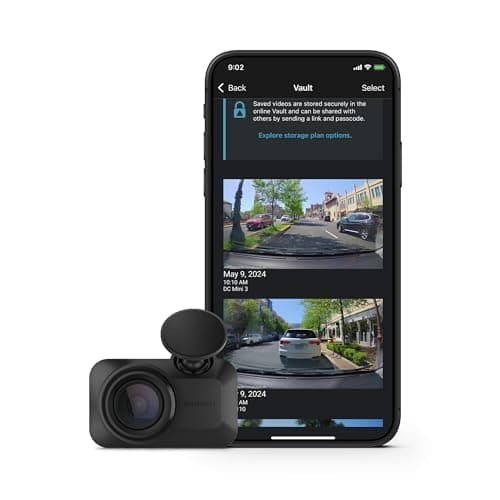 Garmin Dash Cam Mini 3, 1080P, Key-SizedKey-sized at 2 by 1.3 by 0.8 inches and 1.1 ounces, with a built-in polarizer and voice control, from the one brand here with a long-standing US service footprint. It is 1080P, and its best remote features sit behind a paid Vault subscription. | A car you have to hand back, and a camera nobody notices | $99.99 · View on Amazon #ad Price as of October 25, 2026. How we’re funded |
| 2 | 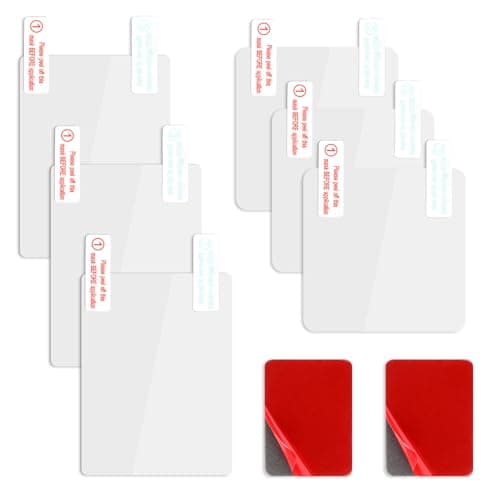 Electrostatic Film Kit for Dash Cams, 6 Films + 2 Adhesive SheetsSix static-cling films and two double-sided adhesive sheets, in two sizes, so the pad bonds to a film that peels off instead of to the windshield. It is the cheapest thing on this site and it solves the one problem that stops people using a dash cam in a car they do not own. | Keeping an adhesive mount off the glass entirely | $5.92 · View on Amazon #ad Price as of October 25, 2026. How we’re funded |
| 3 |  Garmin Universal Dash Cam Suction Cup MountThe first-party suction mount, with a choice of mounting arms in the box, so a Garmin camera attaches and detaches with nothing adhesive touching the glass. It costs a meaningful fraction of the camera, and it is Garmin-specific. | Making a Garmin camera leave no trace at all | $24.80 · View on Amazon #ad Price as of October 25, 2026. How we’re funded |
| 4 | 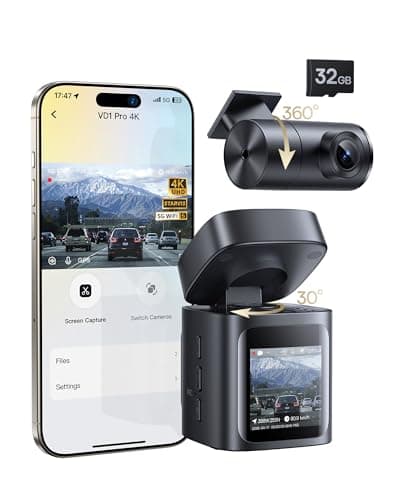 Baseus VD1 Pro Solar Dash Cam, 4K + 1080P, Battery Parking ModeA built-in battery and a solar panel give up to 14 days of parking protection with no hardwire kit, which is the one thing a borrowed car makes impossible. The listing is unusually direct that solar power covers parking events only — driving still needs the cable. | Parking protection in a car you cannot wire into | $99.99 · View on Amazon #ad Price as of October 25, 2026. How we’re funded |
| 5 | 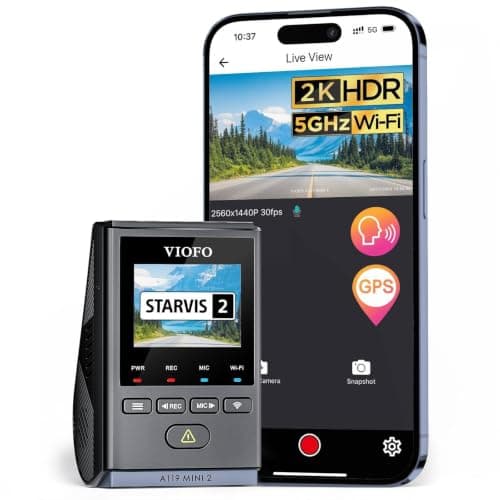 VIOFO A119 Mini 2 Front Dash Cam, STARVIS 2 IMX675, 1440P 60 FPSA named STARVIS 2 IMX675 sensor and a published F1.6 seven-glass lens in a body under three inches tall, for roughly a third less than the two-channel version. It is one channel only — there is no rear camera and no way to add one. | The cheapest camera here that names its Sony sensor | Check price on Amazon #ad We show a price only when we can verify one. How we’re funded |
#1 · A car you have to hand back, and a camera nobody notices
Garmin Dash Cam Mini 3, 1080P, Key-Sized
Garmin
Key-sized at 2 by 1.3 by 0.8 inches and 1.1 ounces, with a built-in polarizer and voice control, from the one brand here with a long-standing US service footprint. It is 1080P, and its best remote features sit behind a paid Vault subscription.
The dimensions are the specification. Two inches by one and a third, at a tenth of a pound, is a camera that reads as part of the mirror housing rather than as equipment — which is exactly what you want in a vehicle that is not yours and which somebody else inspects when you return it.
The subscription structure deserves a clear read. Recording, incident saving and the polarizer all work for free. Live view and parking notifications do not: those need a paid Vault plan, constant power and a Wi-Fi connection, and the listing says so in both bullets. For a week in a rental, none of that matters.
It is 1080P. Every other camera here records 2K or 4K, and against them this will give you a less legible plate at distance. What it gives you instead is a camera nobody notices and a brand with a US support operation behind it.
What works
- Smallest and lightest camera on this site, by a wide margin
- Built-in polarizer, which no other camera here includes at this price
- Voice control for saving a clip without touching it
- Works fully offline for recording and incident saving
- Established brand with US support rather than a marketplace seller
- Synchronized multi-camera playback if you later add a second
What does not
- 1080P only
- Live view and parking notifications need a paid subscription
- Does not publish a sensor, a temperature range, or whether a card is included
- 1-year warranty
- Single channel, no rear or cabin option
- The most expensive 1080P camera here
Skip this if
Skip it if this is the camera for your own car and it will stay there. For the same money a 2K camera with a named sensor records a more legible plate, and in a car you own you do not need the camera to be invisible.
Where these numbers came from
We have not handled this product. Here is what we did instead.
#2 · Keeping an adhesive mount off the glass entirely
Electrostatic Film Kit for Dash Cams, 6 Films + 2 Adhesive Sheets
Yuomeaz
Six static-cling films and two double-sided adhesive sheets, in two sizes, so the pad bonds to a film that peels off instead of to the windshield. It is the cheapest thing on this site and it solves the one problem that stops people using a dash cam in a car they do not own.
This is a two-dollar fix for a problem that otherwise stops the whole project. Most compact dash cams ship with an adhesive pad and nothing else, and an adhesive pad on a rental or leased windshield is the thing you cannot undo. The film goes between them.
It is a consumable and should be treated as one. Six films means six installs, and the right number for a week in a rental is one — so one pack covers several trips.
What is not published is the temperature rating, and that is the figure that would tell you whether the film holds through an August afternoon on a dashboard. No maker in this product class publishes it, so treat an unattended camera in extreme heat as unproven rather than safe.
What works
- Removes the one real objection to a dash cam in a borrowed car
- Two sizes included, so it suits different mount footprints
- Six installs per pack
- Costs a fraction of a suction mount
- Works with any camera that uses an adhesive pad
What does not
- A consumable, not a permanent fix
- No temperature rating published, which is the figure that matters most here
- No stated warranty
- Marketplace brand with no service history
- Adds a layer between the mount and the glass, so the camera sits very slightly further out
Skip this if
Skip it if your camera already mounts by suction. You would be adding a consumable layer to solve a problem your mount does not have.
Where these numbers came from
We have not handled this product. Here is what we did instead.
#3 · Making a Garmin camera leave no trace at all
Garmin Universal Dash Cam Suction Cup Mount
Garmin
The first-party suction mount, with a choice of mounting arms in the box, so a Garmin camera attaches and detaches with nothing adhesive touching the glass. It costs a meaningful fraction of the camera, and it is Garmin-specific.
In a borrowed or leased car the mount is the part that gets you in trouble, not the camera. Adhesive pads are designed not to let go; a suction cup is designed to. This is the first-party version of that swap, which matters because a generic cradle may not take a Garmin's ball joint.
The included arms are the useful bit. Windshield rake varies enormously between cars, and in a rental you find out what yours is when you sit in it, so having more than one arm in the bag is the difference between a usable angle and a view of your own hood.
It publishes no hold weight and no temperature rating, which for a suction product in a hot car is exactly the figure you would want. We could not find one.
What works
- First-party, so it fits the Garmin mount interface properly
- Several mounting arms included for different windshield angles
- Leaves nothing behind on the glass
- Reusable across trips and vehicles
What does not
- Garmin cameras only
- Expensive relative to a generic suction cradle
- Publishes neither a hold weight nor a temperature rating
- A suction cup on a hot windshield is the part most likely to let go
- 1-year warranty
Skip this if
Skip it if your camera is not a Garmin. The mount interface is proprietary and a universal cradle is a quarter of the price for everything else.
Where these numbers came from
We have not handled this product. Here is what we did instead.
#4 · Parking protection in a car you cannot wire into
Baseus VD1 Pro Solar Dash Cam, 4K + 1080P, Battery Parking Mode
Baseus
A built-in battery and a solar panel give up to 14 days of parking protection with no hardwire kit, which is the one thing a borrowed car makes impossible. The listing is unusually direct that solar power covers parking events only — driving still needs the cable.
The reason to care about this camera is that parking mode normally requires cutting into a fuse box, and in a car you do not own that is not on the table. A battery and a solar panel is the only route to protecting a parked rental, and the listing claims up to 14 days of it.
Read the second bullet before you buy, because the listing puts the catch in writing: solar and battery power the parking function only. To record while you drive you plug in the supplied cable, and the rear camera is wired regardless. This is not a cable-free dash cam.
The sensor is named — IMX335 — and that is a STARVIS-generation part rather than STARVIS 2, which is consistent with the price. The naming is to the listing's credit even though the part is the older one.
What works
- Parking protection with no hardwire kit, which nothing else here offers
- Up to 14 days of parking protection claimed
- Names its sensor part number
- 4K front channel with a published F1.6 aperture
- 32 GB card included
- 2-year warranty
- States its own limitations in the listing rather than burying them
What does not
- Battery and solar cover parking only — driving needs the cable
- The rear camera must be wired no matter what
- Parking recording is event-triggered 30-second clips, not continuous
- IMX335 is a previous-generation STARVIS part
- The app only works beside the car
- Shows one camera view at a time on screen
- No published operating temperature range for a battery product
Skip this if
Skip it if you expected to never plug it in. The solar panel is for the parked car; the drive is still a cable, and if that is a surprise after purchase it is the wrong camera.
Where these numbers came from
We have not handled this product. Here is what we did instead.
#5 · The cheapest camera here that names its Sony sensor
VIOFO A119 Mini 2 Front Dash Cam, STARVIS 2 IMX675, 1440P 60 FPS
VIOFO
A named STARVIS 2 IMX675 sensor and a published F1.6 seven-glass lens in a body under three inches tall, for roughly a third less than the two-channel version. It is one channel only — there is no rear camera and no way to add one.
This is the cheapest route to a verifiable sensor. The IMX675 here is the same part VIOFO puts in both channels of the A229 Plus, so the night-time image quality argument is largely the same argument — you are giving up the rear camera, not the sensor.
The published temperature range is worth as much as the sensor name. 5 F to 149 F is a real, checkable figure, and a camera that lives on a windshield will see both ends of it. Most listings in this category say "temperature proof" and stop.
Size is the other reason to want this one. At 2.93 inches tall it genuinely hides behind a rear-view mirror, which matters if you want the camera to be unobtrusive rather than a second screen in your eyeline.
What works
- Names the Sony part number — STARVIS 2 IMX675
- Publishes a real operating temperature range, 5 F to 149 F
- Publishes the lens: 7-glass, F1.6
- Small enough to hide behind the mirror
- Supercapacitor, built-in GPS, 5 GHz Wi-Fi
- The listing names the exact hardwire kit ASIN instead of leaving you to guess
What does not
- Front channel only — no rear camera and no upgrade path to one
- No memory card included
- Parking mode needs the separate HK4 kit
- HDR costs you half the frame rate
- No interior camera, so it cannot serve rideshare or a monitored driver
Skip this if
Skip it if you want the rear covered. The camera that films the vehicle that rear-ends you is the one this does not have, and no accessory adds it later.
Where these numbers came from
We have not handled this product. Here is what we did instead.
| Spec | Garmin | Yuomeaz | Garmin | Baseus | VIOFO |
|---|---|---|---|---|---|
| Channels | 1 — front | Not published | Not published | 2 — 4K front + 1080P rear | 1 — front only; no rear camera support |
| Resolution | 1080P HD | Not published | Not published | Not published | 1440P at 60 FPS, or up to 2592x1944P at 30 FPS |
| Field of view | 140 degrees | Not published | Not published | 140 degrees front, 120 degrees rear | Not published |
| Dimensions | 2 x 1.3 x 0.8 in, 1.1 oz | Not published | 5.75 x 2.83 x 2.36 in | Not published | 2.93 x 1.81 x 1.63 in |
| Lens | Built-in Garmin Clarity polarizer, to cut windshield glare | Not published | Not published | 6-layer glass, F1.6 aperture | 7-glass, F1.6 aperture, 140 degrees |
| Voice control | Yes — save video, start and stop audio recording | Not published | Not published | English | Not published |
| Remote live view | Yes, but requires a paid Vault subscription plus constant power and Wi-Fi | Not published | Not published | Not published | Not published |
| Parking guard | Notification to your phone on a detected incident; also requires the paid Vault subscription and constant power | Not published | Not published | Not published | Not published |
| Multi-camera | Synchronized playback across up to four Garmin dash cams, each sold separately | Not published | Not published | Not published | Not published |
| Heat | Stated as designed for direct sunlight and hot car interiors; no range published | Not published | Not published | Not published | Not published |
| Warranty | 1 year limited | None stated | 1 year limited | 2 years | 18 months, plus 6 months on registration |
| Model number | 010-02899-00 | Not published | 010-12530-25 | Not published | Not published |
| Sensor | Not published | Not published | Not published | Sony IMX335, described as STARVIS | Sony STARVIS 2 IMX675 |
| Card included | Not published | Not published | Not published | 32 GB | None. Class 10 or UHS-I required, up to 512 GB |
| Contents | Not published | 6 electrostatic films, 2 sheets of double-sided adhesive | Not published | Not published | Not published |
| Film sizes | Not published | 3.94 x 3.15 in and 3.15 x 3.15 in | Not published | Not published | Not published |
| Removal claim | Not published | Stated to leave no damage or scratches to the surface | Not published | Not published | Not published |
| Material | Not published | Transparent film | Not published | Not published | Not published |
| Units in pack | Not published | 8 pieces total | Not published | Not published | Not published |
| Thickness | Not published | 0.04 in as listed | Not published | Not published | Not published |
| Temperature rating | Not published | Not published | Not published | Not published | Not published |
| Published hold weight | Not published | Not published | Not published | Not published | Not published |
| Type | Not published | Not published | Portable mini suction cup mount | Not published | Not published |
| Compatibility | Not published | Not published | Compatible Garmin dash cams only | Not published | Not published |
| Mounting arms | Not published | Not published | Several included, to suit different windshields | Not published | Not published |
| Parking power | Not published | Not published | Not published | Solar panel plus built-in lithium battery, up to 14 days, no hardwire kit required | Not published |
| Driving power | Not published | Not published | Not published | Requires the included cable to the car's power supply | Not published |
| Wi-Fi | Not published | Not published | Not published | 5 GHz Wi-Fi 6, stated at up to 3x faster downloads | 5 GHz |
| GPS | Not published | Not published | Not published | Yes, viewable in the Baseus app | Built-in — route, speed and time written into the file |
| App range | Not published | Not published | Not published | Only when the phone is near the car and on the camera's Wi-Fi | Not published |
| Operating temperature range | Not published | Not published | Not published | Not published | 5 F to 149 F |
| HDR trade-off | Not published | Not published | Not published | Not published | With HDR enabled the frame rate drops from 60 to 30 FPS |
| Power storage | Not published | Not published | Not published | Not published | Supercapacitor |
| Parking modes | Not published | Not published | Not published | Not published | 3 — buffered auto event detection (15s before / 30s after), low bitrate, time-lapse |
| Hardwire kit | Not published | Not published | Not published | Not published | HK4, sold separately (the listing names ASIN B09MRVP2PX) |
The two settings to change before you drive off
Both take a minute and both matter more in a borrowed car than in your own.
Turn audio recording off unless you specifically want it. You may be carrying passengers who have not agreed to be recorded, and the consent rules for in-car audio vary by state — the dash cam legality guide on this site covers the shape of that. Both the Garmin and the VIOFO here have voice control, which means they are listening for commands whether or not they are recording audio to the file.
Then check the time and date. A clip with the wrong timestamp is substantially less useful as evidence, and a camera that has been in a drawer since your last trip will have drifted or reset. Cameras with GPS — including both minis here — set themselves from the satellites once they get a fix, which is one more reason to prefer one that has it.
What we cannot tell you
Three things, stated rather than papered over.
We cannot tell you what your rental agreement says, as above. We cannot tell you whether an electrostatic film or a suction cup will hold through a day parked in direct sun, because no maker in either product class publishes a temperature rating and we have not tested one. And we cannot tell you that any of this is invisible — a camera on a windshield is visible to anyone who looks at the windshield. What these setups guarantee is that nothing is left behind and nothing is modified, which is a different and more achievable claim.
Sources
Everything on this page traces back to one of these. Where a figure could not be sourced, the page says so rather than filling the gap.
- Garmin Dash Cam Mini 3, ultracompact key-sized 1080p with a 140-degree field of view, 2 x 1.3 x 0.8 inches and 1.1 ounces, built-in Garmin Clarity polarizer, voice control, live view and parking guard both requiring a paid Vault subscription with constant power — retailer listing, Amazon.com (retrieved 2026-10-17)
- Garmin Universal Dash Cam Suction Cup Mount, portable mini suction mount for compatible Garmin dash cams with several mounting arms included; no hold weight or temperature rating published — retailer listing, Amazon.com (retrieved 2026-10-17)
- Electrostatic film pack for dash cams, 6 films in 3.94x3.15in and 3.15x3.15in plus 2 sheets of double-sided adhesive, stated to install without causing damage or scratches to the surface of the car — retailer listing, Amazon.com (retrieved 2026-10-17)
- Baseus VD1 Pro Solar Dash Cam, solar and built-in lithium battery stated at up to 14 days of parking protection without a hardwire kit, with the listing stating that solar and battery support parking protection and event recording only and that continuous driving recording requires the included cable and the rear camera a wired connection — retailer listing, Amazon.com (retrieved 2026-10-17)
- VIOFO A119 Mini 2, 2.93 x 1.81 x 1.63 inches, STARVIS 2 IMX675, built-in GPS, supercapacitor rated 5F to 149F, single front channel with no rear camera support — retailer listing, Amazon.com (retrieved 2026-10-17)