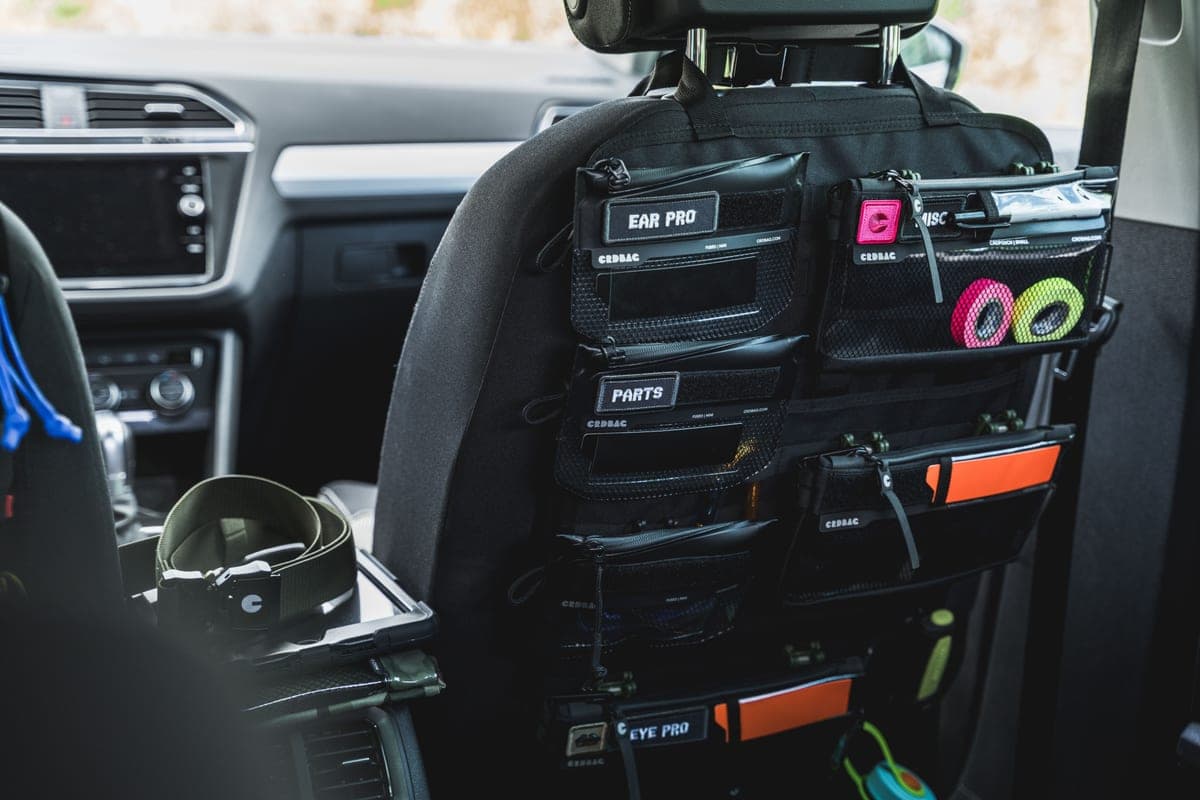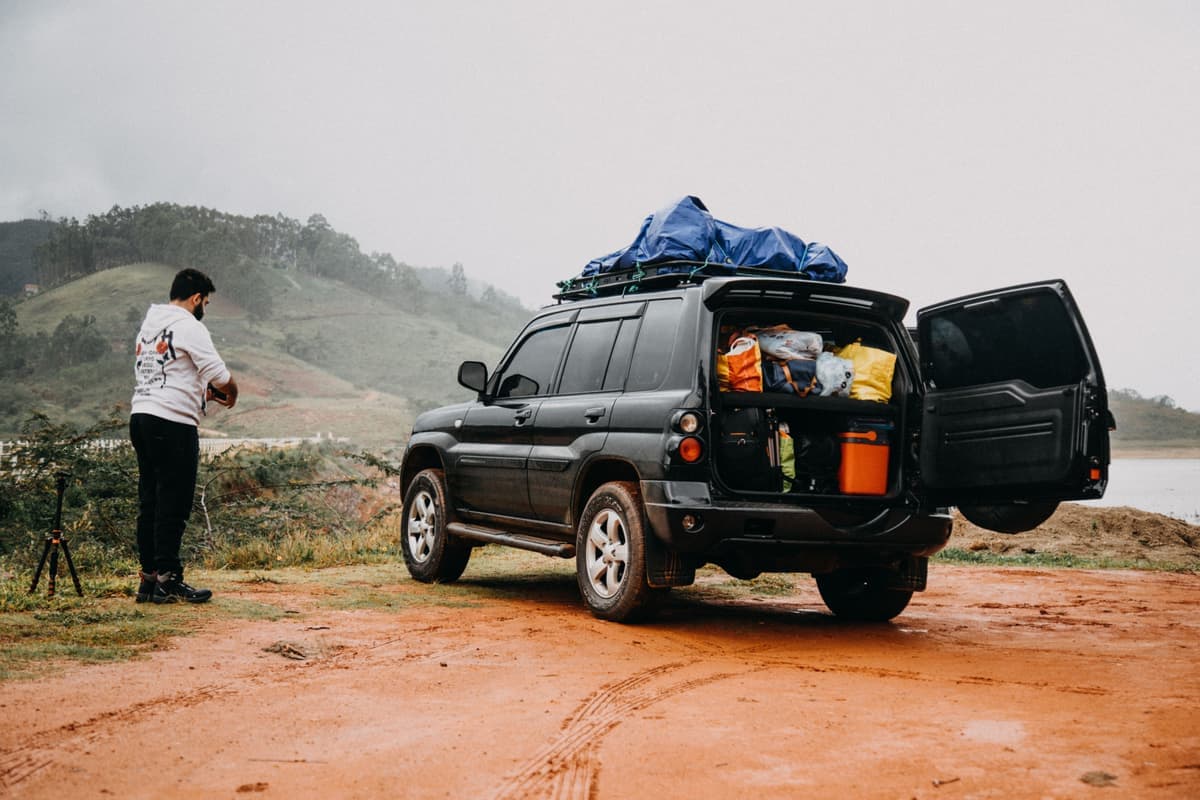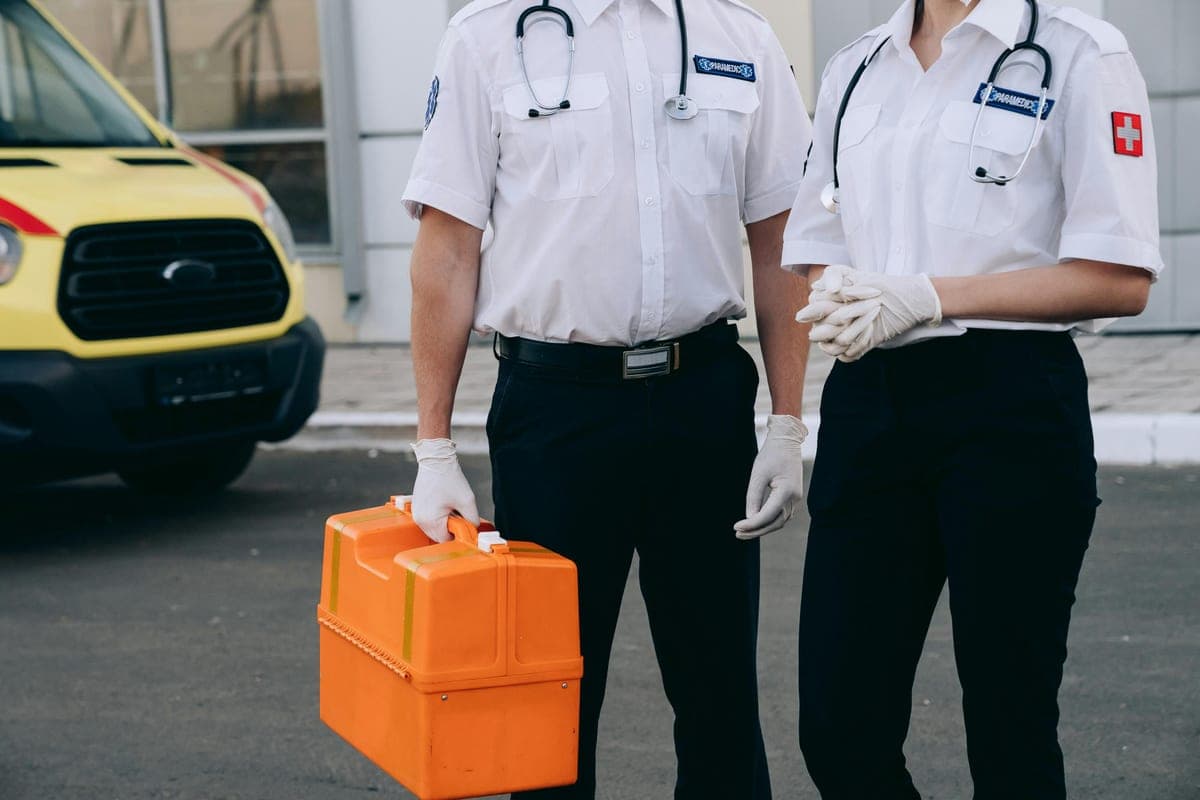
Once the containers are in, the question becomes what goes in them. Most people either under-pack and are caught out at the roadside, or over-pack and carry twenty pounds of things they last touched two years ago.
The roadside group — this is the one that matters
- Jump leads or a lithium jump pack. The pack is smaller and works without a second car, which is the scenario you are actually in.
- A torch that is not your phone. Your phone is the thing most likely to be flat at the moment you need light.
- A tire pressure gauge, and a plug kit or inflator if you are comfortable using one.
- A basic first aid kit.
- A high-visibility vest and a warning triangle. Cheap, small, and the difference between being seen and not on a hard shoulder.
- Work gloves. Changing a wheel without them is unpleasant and slower.
The weekly group
- Reusable shopping bags. The single most-used thing in most trunks.
- A folding crate or a second small organizer for the shop that does not fit in the first.
- An umbrella.
- Wipes and a roll of paper towel.
- A blanket or an old towel, which does duty as a dog towel, a picnic blanket and something to kneel on.
Quick picks
| # | Product | Best for | Price |
|---|---|---|---|
| 1 | 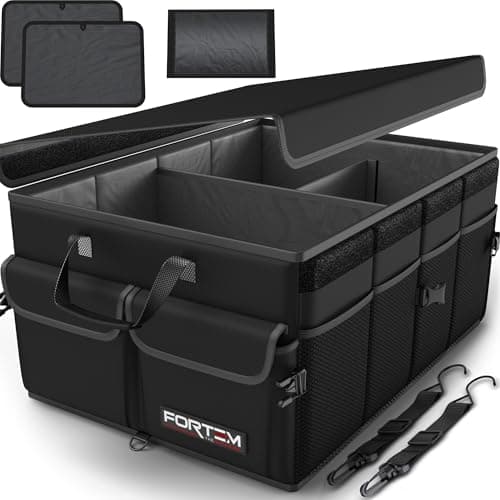 FORTEM Trunk Organizer for SUV, 65LSame construction as the 50 L, 30% more volume. In an SUV well the smaller one slides; this one is wide enough to wedge. FORTEM Trunk Organizer for SUV, 65LSame construction as the 50 L, 30% more volume. In an SUV well the smaller one slides; this one is wide enough to wedge. | SUV wells and a real grocery run | $37.99 · View on Amazon #ad Price as of October 25, 2026. How we’re funded |
| 2 | 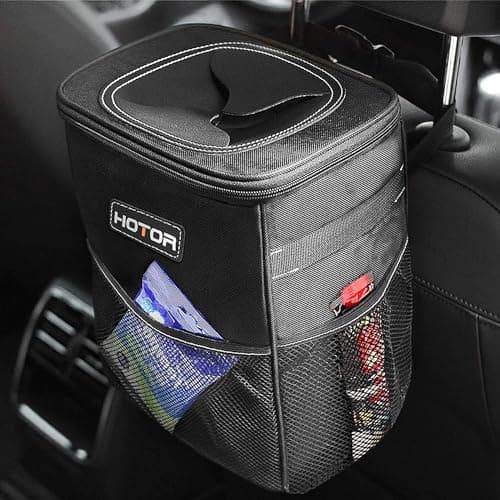 HOTOR Car Trash Can, Leakproof, 2 Gallon2 gallons, leakproof, with adjustable straps and magnetic snaps — the most-sold shape in this category and a sensible starting point. HOTOR Car Trash Can, Leakproof, 2 Gallon2 gallons, leakproof, with adjustable straps and magnetic snaps — the most-sold shape in this category and a sensible starting point. | The default car bin | $9.98 · View on Amazon #ad Price as of October 25, 2026. How we’re funded |
| 3 | 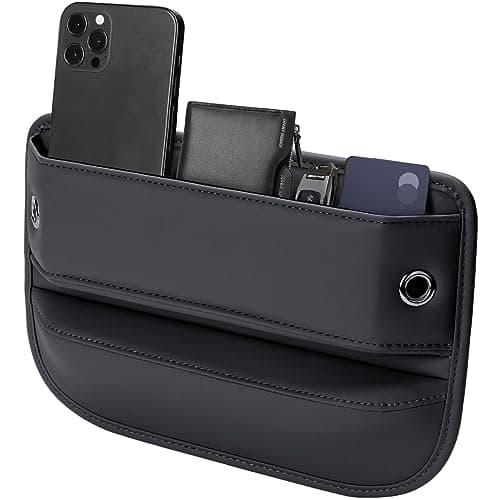 Owntow Premium Leather Seat Gap Filler Organizer, 0.2"–1.2" GapsPublishes the gap width it is designed for — 0.2" to 1.2" — and its own external dimensions, so both halves of the fitment question are answerable before you order. Owntow Premium Leather Seat Gap Filler Organizer, 0.2"–1.2" GapsPublishes the gap width it is designed for — 0.2" to 1.2" — and its own external dimensions, so both halves of the fitment question are answerable before you order. | Knowing before you buy whether it fits | $26.99 · View on Amazon #ad Price as of October 25, 2026. How we’re funded |
| 4 | 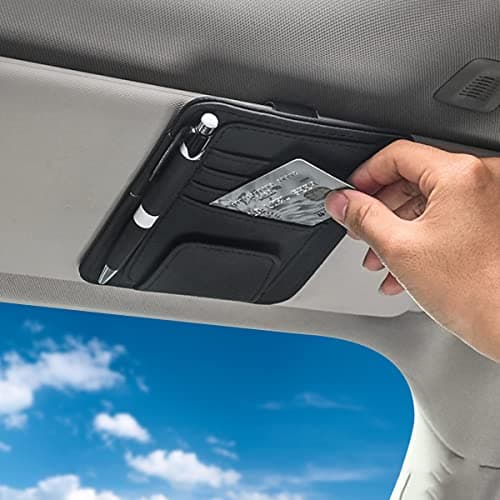 Aturmon Small Leather Sun Visor Organizer, 7 CompartmentsSeven compartments including dedicated slots for registration, insurance and license — the document case that happens to hold sunglasses, rather than the reverse. Aturmon Small Leather Sun Visor Organizer, 7 CompartmentsSeven compartments including dedicated slots for registration, insurance and license — the document case that happens to hold sunglasses, rather than the reverse. | Registration and insurance, kept together | $9.99 · View on Amazon #ad Price as of October 25, 2026. How we’re funded |
#1 · SUV wells and a real grocery run
FORTEM Trunk Organizer for SUV, 65L
FORTEM
Same construction as the 50 L, 30% more volume. In an SUV well the smaller one slides; this one is wide enough to wedge.
65 L is the size most SUV owners should start at. Below that the organizer becomes a thing that slides around next to your shopping rather than the thing holding it.
Volume is not the same as footprint. A tall 65 L bag in a shallow sedan well wastes the height and tips; the same bag in a Highlander well is barely half the floor.
What works
- The most common size in this category, so it is the one most vehicles are sized around
- Same rigid-plate construction as the 50 L
- Straps let you anchor it to a tie-down instead of trusting friction alone
What does not
- No published external dimensions
- 600D rather than the 1680D used on FORTEM's cooler models
- Soft cover only
Skip this if
Skip it if your trunk is a sedan's. In a sedan well the height is dead space and a 45 L two-compartment model sits better.
Where these numbers came from
We have not handled this product. Here is what we did instead.
#2 · The default car bin
HOTOR Car Trash Can, Leakproof, 2 Gallon
HOTOR
2 gallons, leakproof, with adjustable straps and magnetic snaps — the most-sold shape in this category and a sensible starting point.
Two gallons is more than most cars need weekly and exactly right for a road trip. Under-sizing a car bin is the mistake — a small one overflows and then you have loose trash again.
Leakproof is the specification that matters. A fabric bin without a sealed liner is a smell you will not get out of the car.
Magnetic snaps are for holding the mouth open. They are convenient and they are also the part most likely to stop working.
What works
- Genuinely leakproof liner
- 2 gallons
- Multiple mounting positions
What does not
- No published dimensions
- No lid on this model
- Magnetic snaps weaken over time
Skip this if
Skip it if smell is your problem rather than volume — buy one with a lid.
Where these numbers came from
We have not handled this product. Here is what we did instead.
#3 · Knowing before you buy whether it fits
Owntow Premium Leather Seat Gap Filler Organizer, 0.2"–1.2" Gaps
Owntow
Publishes the gap width it is designed for — 0.2" to 1.2" — and its own external dimensions, so both halves of the fitment question are answerable before you order.
Go and measure your gap now, with a ruler, at the widest point. If it is over 1.2" this product will sag into it, and no amount of "universal" in a listing changes that.
A single-pack is a deliberate choice: the driver's side gap is the one that swallows things. The passenger side rarely earns a second unit, and this one is reversible so you can choose which side it goes on.
The listing states it sits in front of the seat belt receiver without blocking seat movement, the belt or the cup holders. That is the detail to check against your own car, because a console-mounted belt buckle is exactly where 11.82" of gap filler wants to be.
What works
- Publishes an actual fitment range, which most of the category does not
- Publishes its own external dimensions as well as the gap range
- Reversible, so one unit works on either side
- Cable holes at both ends rather than a cord trapped under it
What does not
- Useless if your gap is wider than 1.2"
- One unit means the passenger gap stays open
- No published information on what holds the shape behind the leather
Skip this if
Skip it if you have measured a gap wider than 1.2". Buy a wedge-type filler that spans, not a box that drops in.
Where these numbers came from
We have not handled this product. Here is what we did instead.
#4 · Registration and insurance, kept together
Aturmon Small Leather Sun Visor Organizer, 7 Compartments
Aturmon
Seven compartments including dedicated slots for registration, insurance and license — the document case that happens to hold sunglasses, rather than the reverse.
Keeping registration and proof of insurance on the visor rather than in the glove box is a small, real convenience at a traffic stop — the documents are where your hands already are.
Small is deliberate here. A fat visor organizer blocks the mirror and hangs into your eye line when the visor is down.
What works
- Purpose-built document slots
- Leather rather than PU
- Small enough not to obstruct
What does not
- Seven compartments in a small case means each is tight
- No zip
- Elastic strap can relax
Skip this if
Skip it if you carry a lot on the visor — this is the compact one.
Where these numbers came from
We have not handled this product. Here is what we did instead.
The front-cabin group
| Item | Where | Why there |
|---|---|---|
| Cards, coins, keys | Seat gap organizer | Findable one-handed, without looking |
| Sunglasses | Visor organizer | At eye level, where you already look |
| Registration, insurance | Visor organizer | Reachable without leaving your seat |
| Owner's manual, fuses, gauge | Glove box, lower layer | Bulky, rarely needed |
| One charging cable | Console, upper layer | Needed occasionally, not urgently |
| Phone | A mount | It needs to be visible, not stored |
What to take out today
- The vehicle title. It is the paperwork that helps someone else sell your car.
- A spare key. A spare key inside the car is not a spare key.
- Anything you cannot remember using in the last twelve months. In most cars that is three cables, a decade of receipts and an expired insurance card.
- Aerosols and pressurized containers, in summer. A parked cabin reaches temperatures those are not rated for.
- Bottled water you have been carrying for a year. Keep water, but rotate it.
- Anything valuable and visible. The best anti-theft measure in a car is an empty-looking interior.
Seasonal, in and out
Winter adds an ice scraper, a snow brush, and in colder regions a shovel and a blanket that is genuinely warm rather than decorative. Summer adds more water and a sunshade. Neither belongs in the car for the other half of the year, and swapping them twice a year is a better system than carrying both permanently.
The rule that keeps it honest
Once a year, take everything out. Anything you did not use and cannot name a specific scenario for does not go back in. Weight is fuel, space is convenience, and a trunk full of just-in-case is a trunk you cannot use for anything else.
Sources
Everything on this page traces back to one of these. Where a figure could not be sourced, the page says so rather than filling the gap.