Most road-trip packing advice is about fitting more in. The actual problem on a long drive is almost never volume — it is that the thing you want at hour three is at the bottom of the trunk, so you either stop or do without.
Sort by frequency first
Before anything goes in the car, put everything in four groups by how often you will reach for it. This takes ten minutes and it is the whole method.
| Group | Examples | Destination |
|---|---|---|
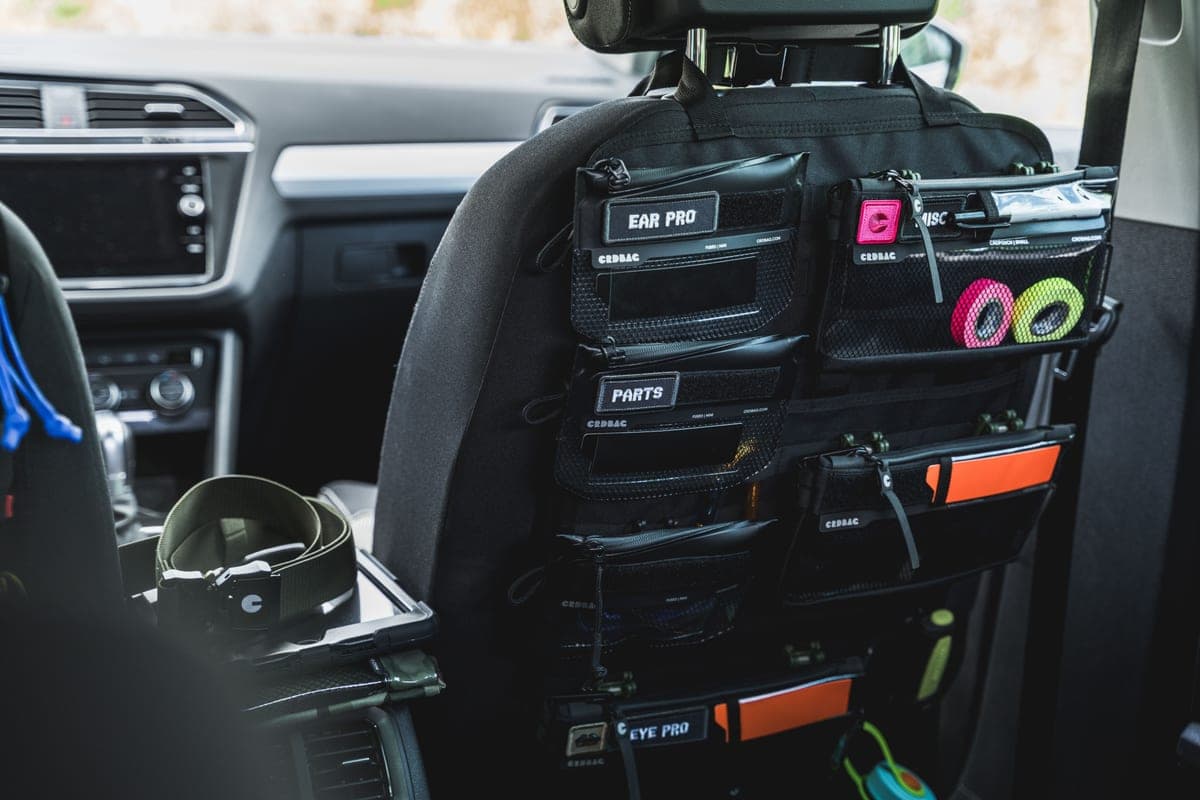
| Needed while moving | Snacks, water, wipes, tissues, charging cables, a bin | Seat-back pockets, door pockets, a hook |
| Needed at a stop, without unpacking | Jackets, a change of clothes, first aid, the cooler | Top layer of the trunk, or a ceiling net for soft items |
| Needed at the first overnight | Overnight bags, toiletries | Top layer of the trunk, tailgate end |
| Needed at the destination only | Everything else | Bottom and front of the trunk |
Then load in reverse
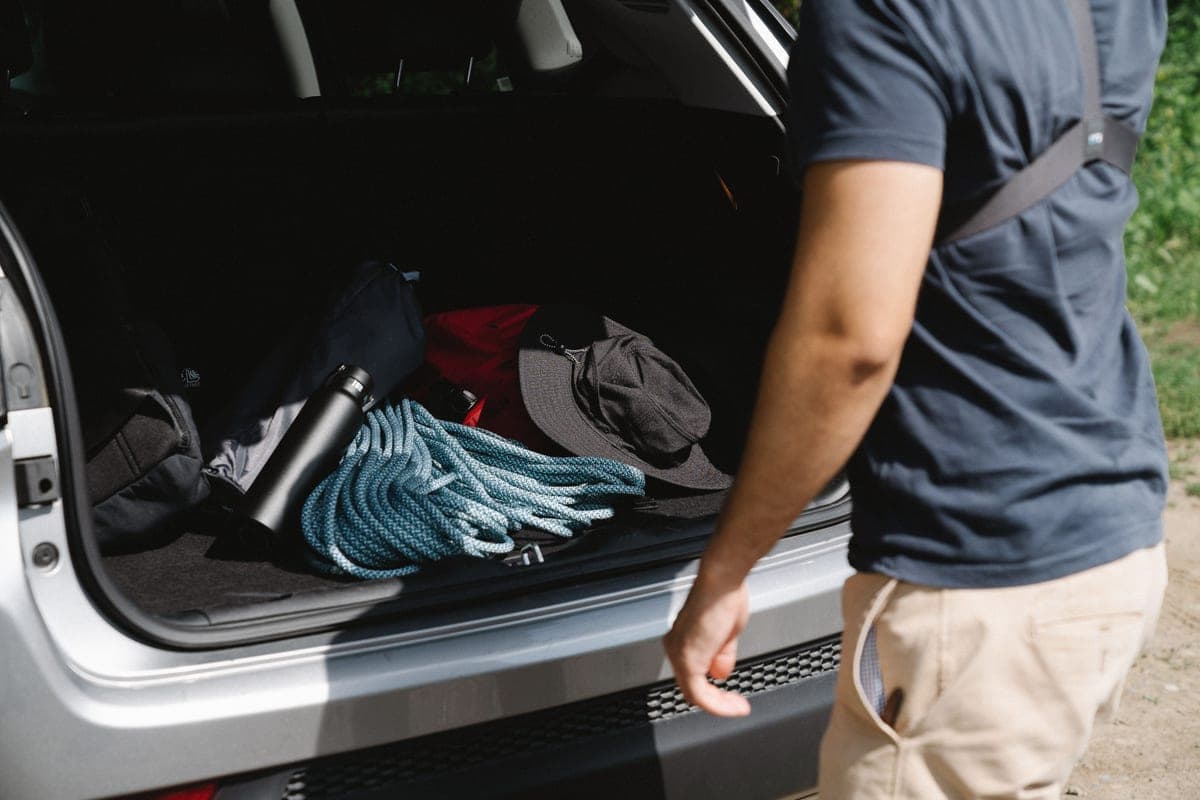
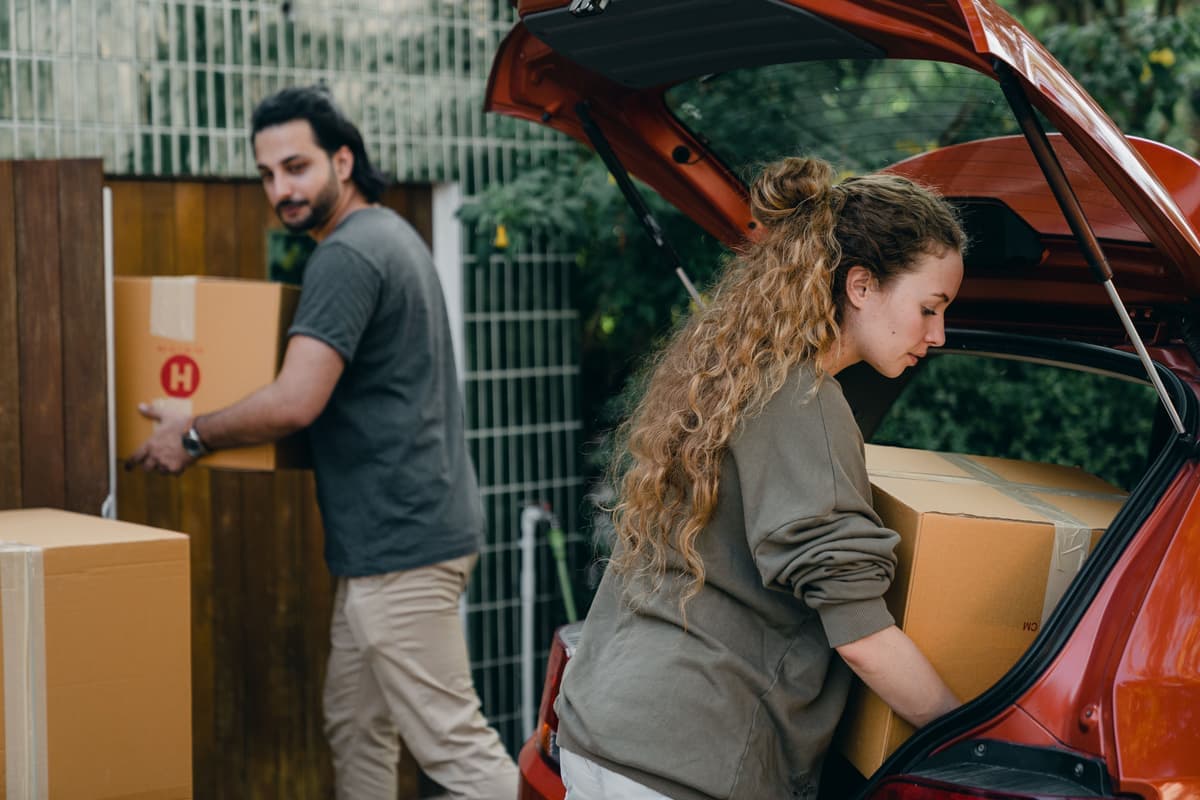
- Destination-only items first, pushed to the front of the cargo area against the rear seats.
- Overnight bags next, at the tailgate end where they come out first.
- The cooler last of the trunk items, and loaded immediately before you leave rather than the night before.
- Soft, light, bulky things into a ceiling net — jackets, blankets, a travel pillow — if your car has four grab handles.
- Seat-back pockets last, with everything anyone will want while moving.
Quick picks
| # | Product | Best for | Price |
|---|---|---|---|
| 1 | 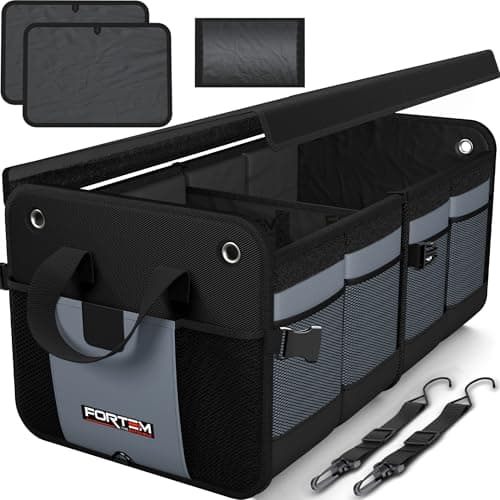 FORTEM Trunk Organizer with Cooler Bag, 1680D, 65LThe upgrade here is the fabric, not the cooler: 1680D Oxford instead of 600D. The insulated bay is the reason to buy it, the denier is the reason it lasts. FORTEM Trunk Organizer with Cooler Bag, 1680D, 65LThe upgrade here is the fabric, not the cooler: 1680D Oxford instead of 600D. The insulated bay is the reason to buy it, the denier is the reason it lasts. | Anyone who buys frozen food before a long drive home | $35.99 · View on Amazon #ad Price as of October 25, 2026. How we’re funded |
| 2 | 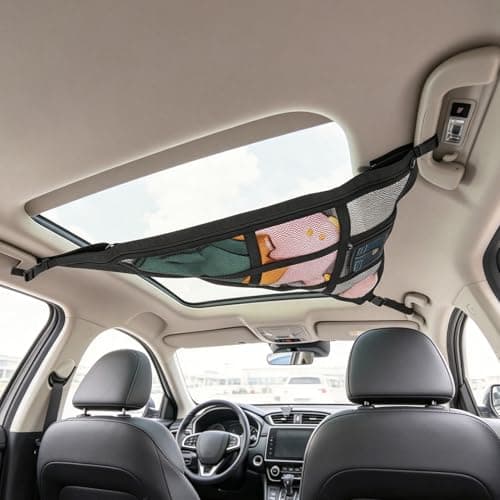 Kaskawise Car Ceiling Cargo Net Pocket, 31.5" x 21.6"Publishes its dimensions — 31.5" x 21.6" — and fits three-handle cars as well as four, which are the two facts that decide whether this works in your car. Kaskawise Car Ceiling Cargo Net Pocket, 31.5" x 21.6"Publishes its dimensions — 31.5" x 21.6" — and fits three-handle cars as well as four, which are the two facts that decide whether this works in your car. | Three-handle cars as well as four | $17.17 · View on Amazon #ad Price as of October 25, 2026. How we’re funded |
| 3 | 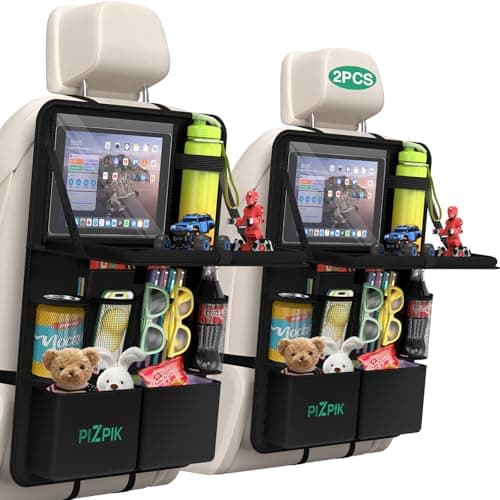 Plzpik Car Backseat Organizer with Tray, 13 Pockets, 2-PackThirteen pockets and a fold-away tray, times two. The maximal option in this category. Plzpik Car Backseat Organizer with Tray, 13 Pockets, 2-PackThirteen pockets and a fold-away tray, times two. The maximal option in this category. | Two children, everything included | $29.99 · View on Amazon #ad Price as of October 25, 2026. How we’re funded |
| 4 | 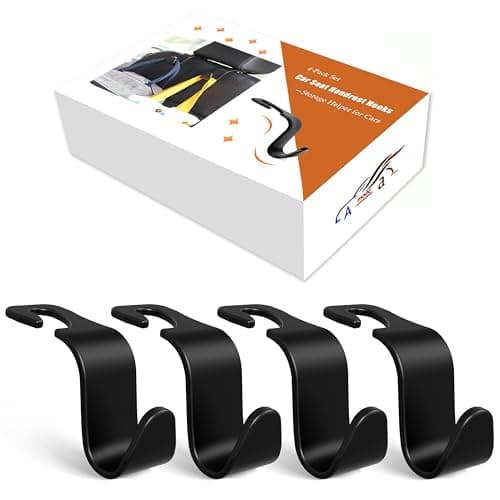 Amooca Car Headrest Hooks, 55 lb, 4-Pack55 lb per the listing, in ABS, with a 360° rotating head — the strongest published rating in this group and the only one that also rotates. Amooca Car Headrest Hooks, 55 lb, 4-Pack55 lb per the listing, in ABS, with a 360° rotating head — the strongest published rating in this group and the only one that also rotates. | The highest published load rating | $6.99 · View on Amazon #ad Price as of October 25, 2026. How we’re funded |
#1 · Anyone who buys frozen food before a long drive home
FORTEM Trunk Organizer with Cooler Bag, 1680D, 65L
FORTEM
The upgrade here is the fabric, not the cooler: 1680D Oxford instead of 600D. The insulated bay is the reason to buy it, the denier is the reason it lasts.
1680D is roughly three times the yarn weight of 600D. In practice that is the difference between a bag that frays at the strap anchors in a year and one that does not.
A cooler bay inside a trunk organizer is not a cooler. It buys you the drive home, not an afternoon at the beach — treat it as insulation, not refrigeration.
What works
- 1680D Oxford — the heaviest fabric FORTEM lists in this range
- Insulated bay integrated rather than a loose bag rattling around
- Three compartments plus the cooler
What does not
- The cooler bay's own capacity is not published
- Heavier and bulkier than the plain 65 L when you collapse it
- Insulated bays are the first thing to smell if a leak is not cleaned up
Skip this if
Skip it if your drive home from the store is ten minutes. You are paying for insulation you will never need and losing a compartment to it.
Where these numbers came from
We have not handled this product. Here is what we did instead.
#2 · Three-handle cars as well as four
Kaskawise Car Ceiling Cargo Net Pocket, 31.5" x 21.6"
Kaskawise
Publishes its dimensions — 31.5" x 21.6" — and fits three-handle cars as well as four, which are the two facts that decide whether this works in your car.
Measure the distance between your grab handles before buying any ceiling net. 31.5" x 21.6" is the span this one is cut for, and a net that has to stretch will sag into the headroom.
Nobody publishes a load rating for these. That absence is the answer: put soft things in them. A ceiling net holding anything hard is an unrestrained object above head height.
Double-layer means an inner pocket for small items so your phone does not migrate to the far corner every time you turn.
What works
- Dimensions published, unlike most of this category
- Fits 3-handle cars too, where most nets in this category need four
- Double-layer construction with a small-item pocket
- No drilling, no tools — it hangs from the handles
What does not
- Still needs grab handles; a car with none cannot mount any ceiling net
- No published load rating anywhere in the category
- Sags over time as the webbing relaxes
Skip this if
Skip it if what you want to store up there is heavy or hard. Nobody publishes a load rating for these, so soft and light is the only honest use.
Where these numbers came from
We have not handled this product. Here is what we did instead.
#3 · Two children, everything included
Plzpik Car Backseat Organizer with Tray, 13 Pockets, 2-Pack
Plzpik
Thirteen pockets and a fold-away tray, times two. The maximal option in this category.
Thirteen pockets across two seatbacks is twenty-six places for a small object to be. That is a filing system, and like all filing systems it only works if it is used.
For a long road trip, pocket count genuinely helps: everything having a place is what stops the footwell filling up by hour three.
What works
- Most pockets of anything here
- Two units with trays
- Full seat-back coverage
What does not
- Overkill for short trips
- A lot of visual clutter behind you
- No published dimensions
Skip this if
Skip it if you mostly drive alone. This is road-trip equipment.
Where these numbers came from
We have not handled this product. Here is what we did instead.
#4 · The highest published load rating
Amooca Car Headrest Hooks, 55 lb, 4-Pack
Amooca
55 lb per the listing, in ABS, with a 360° rotating head — the strongest published rating in this group and the only one that also rotates.
Headrest hooks are one of the few products in this category where a load rating is routinely published, so use it. 55 lb is far more than a grocery bag needs, and the margin is the point.
Rotation matters more than it sounds: a fixed hook holds the bag against the seat back, where a knee hits it. A rotated hook holds it in the footwell where nothing does.
A hook rated 55 lb in ABS is rated for a static pull. Nothing here is rated for a crash load, and a heavy bag on a hook is an unrestrained object in a collision.
What works
- Highest published rating in this group
- 360° rotation
- Four hooks covers both front seats twice
What does not
- ABS, not metal
- Ratings are static, not crash-rated
- Four hooks is more than most cars need
Skip this if
Skip it if you would hang anything heavy and hard behind a passenger's head. No hook here is crash-rated and physics does not care about the listing.
Where these numbers came from
We have not handled this product. Here is what we did instead.
The one rule that is a safety item
The bin, again
A car without a bin on a long drive fills its own door pockets with wrappers by lunchtime, and then everything else you organized stops mattering. It is the cheapest thing on this list and the one that determines whether the car is still pleasant at hour six.
Hooks instead of the footwell
Bags on the floor behind a front seat are in the way of a passenger's feet, slide forward under braking, and empty themselves the first time they tip. A rotating headrest hook holds the same bag clear of everything. Headrest hooks are also the one product in this whole category with published load ratings — 33, 44 and 55 lb — though those are static figures, not crash ratings.
Two things people always forget
- Access to the spare wheel. Load the car, then try to lift the load floor. If you cannot, you will find that out at the roadside.
- The view out of the rear window. A loaded ceiling net or a trunk stacked to the parcel shelf blocks it, and obstructed-view rules exist in most states. Check the mirror after loading rather than assuming.
The mid-trip reset
At each fuel stop: empty the bin, put back anything that migrated, and move the next overnight bag to the tailgate end. Two minutes, and it stops the car degrading over a multi-day trip.
Sources
Everything on this page traces back to one of these. Where a figure could not be sourced, the page says so rather than filling the gap.